Real estate appraisal
Real estate appraisal – is that the real one?
Real estate appraisal or property valuation is the process of determining the value of the property on the basis of the highest and the best use of real property (which basically translates into determining the fair market value of the property). The person who performs this real estate appraisal exercise is called the real estate appraiser or property valuation surveyor. The value as determined by real estate appraisal is the fair market value. The real estate appraisal is done using various methods and the real estate appraisal values the property as different for difference purposes e.g. the real estate appraisal might assign 2 different values to the same property (Improved value and vacant value) and again the same/similar property might be assigned different values in a residential zone and a commercial zone. However, the value assigned as a result of real estate appraisal might not be the value that a real estate investor would consider when evaluating the property for investment. In fact, a real estate investor might completely ignore the value that comes out of real estate appraisal process.
A good real estate investor would evaluate the property on the basis of the developments going on in the region. So real estate appraisal as done by a real estate investor would come up with the value that the real estate investor can get out of the property by buying it at a low price and selling it at a much higher price (as in the present). Similarly, real estate investor could do his own real estate appraisal for the expected value of the property in, say 2 years time or in 5 years time. Again, a real estate investor might conduct his real estate appraisal based on what value he/she can create by investing some amount of money in the property i.e. a real estate investor might decide on buying a dirty/scary kind of property (which no one likes) and get some minor repairs, painting etc done in order to increase the value of the property (the value that the real estate investor would get by selling it in the market). So, here the meaning of real estate appraisal changes completely (and can be very different from the value that real estate appraiser would come out with if the real estate appraiser conducted a real estate appraisal exercise on the property).
A real estate investor will generally base his investment decision on this real estate appraisal that he does by himself (or gets done through someone). So, can we then term real estate appraisal as a really real ‘real estate appraisal’?
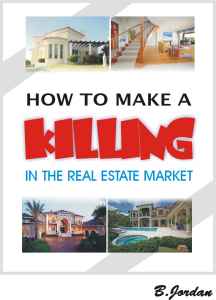
This blog gives helpful insights into the newly released book, "How to Make a Killing in the Real Estate Market." Check out the website at www.howtomakeakillinginrealestate.com
Friday, August 3, 2012


Wednesday, August 1, 2012
Commercial real estate: The big profits
Commercial real estate
Commercial real estate: The big profits
Real estate is often termed as the safest investment avenue. In fact, real estate investments done with proper evaluation of the property (and its true value), can lead to good profits. This is one reason why some people pursue real estate investment as their full time job. The talks of real estate are generally focussed towards residential real estate; commercial real estate seems to take a back seat. However, commercial real estate too is a good option for investing in real estate.
Commercial real estate includes a lot of different kinds of properties. Most people relate commercial real estate with only office complexes or factories/ industrial units. However, that is not all of commercial real estate. There is more to commercial real estate. Health care centers, retail structures and warehouse are all good examples of commercial real estate. Even residential properties like apartments (or any property that consists of more than four residential units) are considered commercial real estate. In fact, such commercial real estate is much in demand.
So, is commercial real estate really profitable? Well, if it were not profitable I would not have been writing about commercial real estate at all. So, commercial real estate is profitable for sure. The only thing with commercial real estate is that recognising the opportunity is a bit difficult as compared to residential real estate. But commercial real estate profits can be real big (in fact, much bigger than you would expect from residential real estate of the same proportion). You could take up commercial real estate for either reselling after appreciation or for renting out to, say, retailers. The commercial real estate development is in fact treated as the first sign for growth of residential real estate. Once you know of the possibility of significant commercial growth in the region (either due to tax breaks or whatever), you should start evaluating the potential for appreciation in the prices of commercial real estate and then go for it quickly (as soon as you find a good deal). And you must really work towards getting a good deal. If you find that commercial real estate, e.g. land, is available in big chunks which are too expensive for you to buy, you could look at forming a small investor group (with your friends) and buy it together (and split the profits later). In some cases e.g. when a retail boom is expected in a region, you might find it profitable to buy a property that you can convert into a warehouse for the purpose of renting to small businesses.
So commercial real estate presents a whole plethora of investing opportunities, you just need to grab it.
Commercial real estate: The big profits
Real estate is often termed as the safest investment avenue. In fact, real estate investments done with proper evaluation of the property (and its true value), can lead to good profits. This is one reason why some people pursue real estate investment as their full time job. The talks of real estate are generally focussed towards residential real estate; commercial real estate seems to take a back seat. However, commercial real estate too is a good option for investing in real estate.
Commercial real estate includes a lot of different kinds of properties. Most people relate commercial real estate with only office complexes or factories/ industrial units. However, that is not all of commercial real estate. There is more to commercial real estate. Health care centers, retail structures and warehouse are all good examples of commercial real estate. Even residential properties like apartments (or any property that consists of more than four residential units) are considered commercial real estate. In fact, such commercial real estate is much in demand.
So, is commercial real estate really profitable? Well, if it were not profitable I would not have been writing about commercial real estate at all. So, commercial real estate is profitable for sure. The only thing with commercial real estate is that recognising the opportunity is a bit difficult as compared to residential real estate. But commercial real estate profits can be real big (in fact, much bigger than you would expect from residential real estate of the same proportion). You could take up commercial real estate for either reselling after appreciation or for renting out to, say, retailers. The commercial real estate development is in fact treated as the first sign for growth of residential real estate. Once you know of the possibility of significant commercial growth in the region (either due to tax breaks or whatever), you should start evaluating the potential for appreciation in the prices of commercial real estate and then go for it quickly (as soon as you find a good deal). And you must really work towards getting a good deal. If you find that commercial real estate, e.g. land, is available in big chunks which are too expensive for you to buy, you could look at forming a small investor group (with your friends) and buy it together (and split the profits later). In some cases e.g. when a retail boom is expected in a region, you might find it profitable to buy a property that you can convert into a warehouse for the purpose of renting to small businesses.
So commercial real estate presents a whole plethora of investing opportunities, you just need to grab it.
Tuesday, July 31, 2012
Investing in California real estate
California real estate
Investing in California real estate
California is one of those states where you find all kinds of properties and where the climatic conditions vary hugely from place to place. You have places with moderate temperatures and you have places which experience all four seasons in their full glory. Traffic Jams, beaches and mild earthquakes are all characteristics of California. So there are a number of things to consider before you actually go for investing in California real estate.
The first thing to consider for investing in California real estate is to select the place/area for your California real estate investment. This is more applicable to people who are looking at California real estate more as an option for leading their life (rather than an investment option). That said, even if you have chosen the region for investing in California real estate, you need to be careful with selecting the location in that region i.e. the California real estate piece that will fetch you good profit. Generally, growth of business (e.g. big companies acquiring land for establishing their offices) is an indicator of appreciation in real estate (whether California real estate or any other). That is the consideration with regards to new developments in California real estate or with respect to significant changes in the economic situation of a particular place in California. However, there are always opportunities and they are there everywhere. You just have to hunt those opportunities in order to profitably invest in California real estate. Post cards, phone call, public auctions, foreclosures etc are all possible opportunities/ways of getting a good deal for California real estate investment. You could also partner with the local attorneys in the region i.e. attorneys who handle property matters in case of death, divorce, defaults etc. These people can give you good leads on California real estate investments. In such cases, whoever gets the information first gets the advantage. You can really lay your hands on some good California real estate deals in this way.
Yes, that does take effort and if you were to think that money can be earned without putting-in even that much effort, I would tend to disagree with you. A small amount of effort can really make a difference of thousands of dollars in terms of the California real estate deal that you get. Another good idea is to inform your friends in California that you are looking to buy a piece of California real estate and, in fact, let everyone know that you are looking for a piece of California real estate. A very good California real estate deal might come to you through one of your contacts, you never know.
So with the California real estate prices rising (as always), investing in California real estate does seem like a great idea.
Investing in California real estate
California is one of those states where you find all kinds of properties and where the climatic conditions vary hugely from place to place. You have places with moderate temperatures and you have places which experience all four seasons in their full glory. Traffic Jams, beaches and mild earthquakes are all characteristics of California. So there are a number of things to consider before you actually go for investing in California real estate.
The first thing to consider for investing in California real estate is to select the place/area for your California real estate investment. This is more applicable to people who are looking at California real estate more as an option for leading their life (rather than an investment option). That said, even if you have chosen the region for investing in California real estate, you need to be careful with selecting the location in that region i.e. the California real estate piece that will fetch you good profit. Generally, growth of business (e.g. big companies acquiring land for establishing their offices) is an indicator of appreciation in real estate (whether California real estate or any other). That is the consideration with regards to new developments in California real estate or with respect to significant changes in the economic situation of a particular place in California. However, there are always opportunities and they are there everywhere. You just have to hunt those opportunities in order to profitably invest in California real estate. Post cards, phone call, public auctions, foreclosures etc are all possible opportunities/ways of getting a good deal for California real estate investment. You could also partner with the local attorneys in the region i.e. attorneys who handle property matters in case of death, divorce, defaults etc. These people can give you good leads on California real estate investments. In such cases, whoever gets the information first gets the advantage. You can really lay your hands on some good California real estate deals in this way.
Yes, that does take effort and if you were to think that money can be earned without putting-in even that much effort, I would tend to disagree with you. A small amount of effort can really make a difference of thousands of dollars in terms of the California real estate deal that you get. Another good idea is to inform your friends in California that you are looking to buy a piece of California real estate and, in fact, let everyone know that you are looking for a piece of California real estate. A very good California real estate deal might come to you through one of your contacts, you never know.
So with the California real estate prices rising (as always), investing in California real estate does seem like a great idea.
i-Zone-3 Launches Gaming Technology on Indiegogo
www.i-zone-3.com
5515 Riverdale Road Suite A
Atlanta, GA 30349
(770) 997-9131
News Release
FOR IMMEDIATE RELEASE
Saturday July 28, 2012 Contact: Beatrice Jordan
(404) 697-8999
Email: b.jordan@i-zone-3.com
i-Zone-3 Launches Cutting Edge
Gaming Technology on Indiegogo
i-Zone-3 Technologies, Inc. is proud to announce the launch of its interactive 5D Gaming Lazer Blasters on Indiegogo. Indiegogo is a crowd funding website for creative projects and i-Zone-3 is using this platform to generate interest and funding in its ground breaking lazer rifle gaming technology. By becoming an early supporter, consumers can obtain custom limited edition gaming peripherals.
i-Zone-3 has launched its Lazer Blasters to satisfy PC gamers need for laser aim precision game shooting. They are currently in the manufacturing stage, with a prototype currently available. Mr. Robin Hossain, CEO of i-Zone-3, explained, "These gaming rifles are a gamers dream come true, there is nothing comparable on the market, especially when combined with our 5D system."
The main features of the i-Zone-3 Lazer Blaster are:
• Designed to look like authentic futuristic military hardware - a collector’s item;
• Fully functional with all pc shooter games;
• Compatible with a range of screen types: computer monitor, CRT screen, projectors, plasma screen, and large on-wall projections;
• Uses patent pending laser gun aiming technology which no other peripheral offers for a pc game. Specifically allowing you to point the gun directly at a target on a huge projection screen and shoot the target directly. Normally you have to move a mouse so the target is at the center of the screen and then fire; and
• Creates an environment for dynamic situational awareness and high level marksmanship.
To view a video of the Lazer Blaster in action go to:
http://igg.me/p/189226?a=942527
i-Zone-3 was formed in 2001 with headquarters currently in Atlanta Georgia. The company specializes in software engineering and information technology and electronic design. In 2011, i-Zone-3 launched an advanced 3D home theater and gaming portfolio, which employs patent pending gameplay methods.
Monday, August 30, 2010
How to Buy a Bank-Owned Home
Now this video is a funny but true look at purchasing REO foreclosures!
Factors Of Mortgage Approval
By Beatrice Jordan
When applying for a mortgage, the lender you have chosen
will take many factors into account. These factors not only
influence what type of loans you can qualify for but also
what your monthly payments will be and how many years you
will take to pay the loan off completely.
Knowing these factors and doing what you can to improve
them all can make a tremendous difference when you go and
see your lender and start the process that will get you
your new property.
Some of the basic factors apply for just about any loan but
are especially important if you are trying to get a
mortgage. The big one is, yep, credit.
How good is your credit Get copies of all of your credit
reports from the 3 major consumer reporting companies and
check each one for errors.
Many times they have errors that can be corrected in just a
few weeks and that helps boost your score. If you have
credit cards, pay them off as well as any other outstanding
bills.
A nice large down payment will always improve your chances
of being approved. If your credit isn’t completely top
notch, the bigger the down payment, the more likely you
will get improved.
If your credit is great, you can still put down as much as
possible to lower the monthly payments or decrease the
total loan time.
Above all else, don’t lie to your lender. If you tell them
you are a supervisor of a power plant and they find out you
are a UPS man who has only had the job for 6 months, you
will be totally screwed. Be honest and your lender will do
their best to work with you.
When applying for a mortgage, the lender you have chosen
will take many factors into account. These factors not only
influence what type of loans you can qualify for but also
what your monthly payments will be and how many years you
will take to pay the loan off completely.
Knowing these factors and doing what you can to improve
them all can make a tremendous difference when you go and
see your lender and start the process that will get you
your new property.
Some of the basic factors apply for just about any loan but
are especially important if you are trying to get a
mortgage. The big one is, yep, credit.
How good is your credit Get copies of all of your credit
reports from the 3 major consumer reporting companies and
check each one for errors.
Many times they have errors that can be corrected in just a
few weeks and that helps boost your score. If you have
credit cards, pay them off as well as any other outstanding
bills.
A nice large down payment will always improve your chances
of being approved. If your credit isn’t completely top
notch, the bigger the down payment, the more likely you
will get improved.
If your credit is great, you can still put down as much as
possible to lower the monthly payments or decrease the
total loan time.
Above all else, don’t lie to your lender. If you tell them
you are a supervisor of a power plant and they find out you
are a UPS man who has only had the job for 6 months, you
will be totally screwed. Be honest and your lender will do
their best to work with you.
Sunday, August 29, 2010
How to Sell Your Properties Using Lease-Options
By David Finkel
Selling one of your properties on a lease-option gives you the biggest benefits of renters and buyers without the downsides that normally go along with selling or renting out your property.
When you lease-option your property you get the best parts of having a renter: monthly streams of cash-flow, tax benefits of maintaining ownership, loan amortization, and a healthy chunk of the future appreciation. You get all this without having to deal with the headaches and hassles of traditional renters.
When you lease-option your property you get the best parts of having a buyer: a large chunk of money as an up-front option payment, someone else who will take care of the day-to-day maintenance of the property, and a large profit when your buyer gets a new loan on the property and cashes you out.
Here are the four steps to sell your property using a lease-option:
Step One: Spread the word
There are three magic words to help you find your tenant-buyer for your property. These words go in bold, large print in all your advertising for the property. They are: Rent to Own. People instantly know what "rent to own" means and they also know they want it.
The two best places to invest in advertising your properties are your local newspaper and in signs around your property. Place a small classified ad in the "For Sale" section of your local paper. Also put a large "Rent to Own" sign in the front yard of the property. And put twenty to thirty signs around the neighborhood on all the major access roads leading past the property. These signs can be professionally printed, but chances are they won’t last long so do them as cheaply as possible. I have found that handmade signs on inexpensive posterboard work as well as the more expensive signs.
Both your classified ad and your signs should have the phone number of a voice mail box where you have recorded a 60-90 second message singing all the biggest benefits of the property and how easy the rent to own program makes for them to be able to own it. Use your voice mail as a screening device—ask callers how much money they have to work with as a down payment. When you run a "rent to own" ad your biggest problem will be getting too many calls! By screening callers through a voicemail box you will spend your time calling back only those who have a healthy sized chunk of cash to give you as their up-front option payment.
Step Two: Calling back prospective tenant-buyers to set up a group showing
Have you ever been faced with a prospective buyer who just won’t make up his mind about whether he wants the property or not? Or have you ever raced over to one of your units to show it to someone who just didn’t show up? There is a better way of doing it—group showings.
Whenever you can get several prospective tenant-buyers all to look at the property at the same time your property just became more attractive. You are creating a competitive environment and that means the person who wants the property needs to act fast or they will lose out to someone else. This competition will be your biggest aide to closing the deal.
The biggest mistake you can make when you are calling back the people who left their name and phone number on your property voice mail box is to invite them to a "showing" for the property. Instead set a definite "appointment" with each person to meet them at the property to have them take a look. Simply set each individual appointment all at the same time! This way not only are you creating that competitive situation, but you are also protecting your time since if two out of the nine people scheduled to meet you don’t show you still have seven people to show the property to.
Step Three: Get them to fill out an application on the spot
Some people won’t want to hurt your feelings by saying no. Instead they will ask for an application and tell you they will send it in later. Don’t fall for this common pitfall. Simply tell them that if they are really serious about the property then they should take a few minutes and fill it in right there. Also make sure you charge $10-20 for each application. Not only will this pay for your credit check of each applicant, but it will also screen out those last few people who are not truly serious about the property.
Step Four: Choose the best person and call to give them the good news
Speed is of the essence here. If you have someone who wants to have the property who has a healthy option payment and good monthly income I recommend that you get a non-refundable deposit from them to hold their position to rent to own your property. You should collect this deposit as soon as possible. Of course you will make this agreement subject your satisfactory approval of their application (if they don’t pass your evaluation your deposit agreement should say you will return their deposit to them and cancel the agreement.)
This is how you market your property as a "Rent to Own" property.
Selling one of your properties on a lease-option gives you the biggest benefits of renters and buyers without the downsides that normally go along with selling or renting out your property.
When you lease-option your property you get the best parts of having a renter: monthly streams of cash-flow, tax benefits of maintaining ownership, loan amortization, and a healthy chunk of the future appreciation. You get all this without having to deal with the headaches and hassles of traditional renters.
When you lease-option your property you get the best parts of having a buyer: a large chunk of money as an up-front option payment, someone else who will take care of the day-to-day maintenance of the property, and a large profit when your buyer gets a new loan on the property and cashes you out.
Here are the four steps to sell your property using a lease-option:
Step One: Spread the word
There are three magic words to help you find your tenant-buyer for your property. These words go in bold, large print in all your advertising for the property. They are: Rent to Own. People instantly know what "rent to own" means and they also know they want it.
The two best places to invest in advertising your properties are your local newspaper and in signs around your property. Place a small classified ad in the "For Sale" section of your local paper. Also put a large "Rent to Own" sign in the front yard of the property. And put twenty to thirty signs around the neighborhood on all the major access roads leading past the property. These signs can be professionally printed, but chances are they won’t last long so do them as cheaply as possible. I have found that handmade signs on inexpensive posterboard work as well as the more expensive signs.
Both your classified ad and your signs should have the phone number of a voice mail box where you have recorded a 60-90 second message singing all the biggest benefits of the property and how easy the rent to own program makes for them to be able to own it. Use your voice mail as a screening device—ask callers how much money they have to work with as a down payment. When you run a "rent to own" ad your biggest problem will be getting too many calls! By screening callers through a voicemail box you will spend your time calling back only those who have a healthy sized chunk of cash to give you as their up-front option payment.
Step Two: Calling back prospective tenant-buyers to set up a group showing
Have you ever been faced with a prospective buyer who just won’t make up his mind about whether he wants the property or not? Or have you ever raced over to one of your units to show it to someone who just didn’t show up? There is a better way of doing it—group showings.
Whenever you can get several prospective tenant-buyers all to look at the property at the same time your property just became more attractive. You are creating a competitive environment and that means the person who wants the property needs to act fast or they will lose out to someone else. This competition will be your biggest aide to closing the deal.
The biggest mistake you can make when you are calling back the people who left their name and phone number on your property voice mail box is to invite them to a "showing" for the property. Instead set a definite "appointment" with each person to meet them at the property to have them take a look. Simply set each individual appointment all at the same time! This way not only are you creating that competitive situation, but you are also protecting your time since if two out of the nine people scheduled to meet you don’t show you still have seven people to show the property to.
Step Three: Get them to fill out an application on the spot
Some people won’t want to hurt your feelings by saying no. Instead they will ask for an application and tell you they will send it in later. Don’t fall for this common pitfall. Simply tell them that if they are really serious about the property then they should take a few minutes and fill it in right there. Also make sure you charge $10-20 for each application. Not only will this pay for your credit check of each applicant, but it will also screen out those last few people who are not truly serious about the property.
Step Four: Choose the best person and call to give them the good news
Speed is of the essence here. If you have someone who wants to have the property who has a healthy option payment and good monthly income I recommend that you get a non-refundable deposit from them to hold their position to rent to own your property. You should collect this deposit as soon as possible. Of course you will make this agreement subject your satisfactory approval of their application (if they don’t pass your evaluation your deposit agreement should say you will return their deposit to them and cancel the agreement.)
This is how you market your property as a "Rent to Own" property.
Subscribe to:
Posts (Atom)