Real estate appraisal
Real estate appraisal – is that the real one?
Real estate appraisal or property valuation is the process of determining the value of the property on the basis of the highest and the best use of real property (which basically translates into determining the fair market value of the property). The person who performs this real estate appraisal exercise is called the real estate appraiser or property valuation surveyor. The value as determined by real estate appraisal is the fair market value. The real estate appraisal is done using various methods and the real estate appraisal values the property as different for difference purposes e.g. the real estate appraisal might assign 2 different values to the same property (Improved value and vacant value) and again the same/similar property might be assigned different values in a residential zone and a commercial zone. However, the value assigned as a result of real estate appraisal might not be the value that a real estate investor would consider when evaluating the property for investment. In fact, a real estate investor might completely ignore the value that comes out of real estate appraisal process.
A good real estate investor would evaluate the property on the basis of the developments going on in the region. So real estate appraisal as done by a real estate investor would come up with the value that the real estate investor can get out of the property by buying it at a low price and selling it at a much higher price (as in the present). Similarly, real estate investor could do his own real estate appraisal for the expected value of the property in, say 2 years time or in 5 years time. Again, a real estate investor might conduct his real estate appraisal based on what value he/she can create by investing some amount of money in the property i.e. a real estate investor might decide on buying a dirty/scary kind of property (which no one likes) and get some minor repairs, painting etc done in order to increase the value of the property (the value that the real estate investor would get by selling it in the market). So, here the meaning of real estate appraisal changes completely (and can be very different from the value that real estate appraiser would come out with if the real estate appraiser conducted a real estate appraisal exercise on the property).
A real estate investor will generally base his investment decision on this real estate appraisal that he does by himself (or gets done through someone). So, can we then term real estate appraisal as a really real ‘real estate appraisal’?
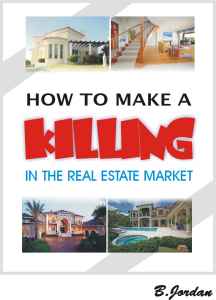
This blog gives helpful insights into the newly released book, "How to Make a Killing in the Real Estate Market." Check out the website at www.howtomakeakillinginrealestate.com
Showing posts with label How to Make a Killing In Real Estate. Show all posts
Showing posts with label How to Make a Killing In Real Estate. Show all posts
Friday, August 3, 2012


Wednesday, August 1, 2012
Commercial real estate: The big profits
Commercial real estate
Commercial real estate: The big profits
Real estate is often termed as the safest investment avenue. In fact, real estate investments done with proper evaluation of the property (and its true value), can lead to good profits. This is one reason why some people pursue real estate investment as their full time job. The talks of real estate are generally focussed towards residential real estate; commercial real estate seems to take a back seat. However, commercial real estate too is a good option for investing in real estate.
Commercial real estate includes a lot of different kinds of properties. Most people relate commercial real estate with only office complexes or factories/ industrial units. However, that is not all of commercial real estate. There is more to commercial real estate. Health care centers, retail structures and warehouse are all good examples of commercial real estate. Even residential properties like apartments (or any property that consists of more than four residential units) are considered commercial real estate. In fact, such commercial real estate is much in demand.
So, is commercial real estate really profitable? Well, if it were not profitable I would not have been writing about commercial real estate at all. So, commercial real estate is profitable for sure. The only thing with commercial real estate is that recognising the opportunity is a bit difficult as compared to residential real estate. But commercial real estate profits can be real big (in fact, much bigger than you would expect from residential real estate of the same proportion). You could take up commercial real estate for either reselling after appreciation or for renting out to, say, retailers. The commercial real estate development is in fact treated as the first sign for growth of residential real estate. Once you know of the possibility of significant commercial growth in the region (either due to tax breaks or whatever), you should start evaluating the potential for appreciation in the prices of commercial real estate and then go for it quickly (as soon as you find a good deal). And you must really work towards getting a good deal. If you find that commercial real estate, e.g. land, is available in big chunks which are too expensive for you to buy, you could look at forming a small investor group (with your friends) and buy it together (and split the profits later). In some cases e.g. when a retail boom is expected in a region, you might find it profitable to buy a property that you can convert into a warehouse for the purpose of renting to small businesses.
So commercial real estate presents a whole plethora of investing opportunities, you just need to grab it.
Commercial real estate: The big profits
Real estate is often termed as the safest investment avenue. In fact, real estate investments done with proper evaluation of the property (and its true value), can lead to good profits. This is one reason why some people pursue real estate investment as their full time job. The talks of real estate are generally focussed towards residential real estate; commercial real estate seems to take a back seat. However, commercial real estate too is a good option for investing in real estate.
Commercial real estate includes a lot of different kinds of properties. Most people relate commercial real estate with only office complexes or factories/ industrial units. However, that is not all of commercial real estate. There is more to commercial real estate. Health care centers, retail structures and warehouse are all good examples of commercial real estate. Even residential properties like apartments (or any property that consists of more than four residential units) are considered commercial real estate. In fact, such commercial real estate is much in demand.
So, is commercial real estate really profitable? Well, if it were not profitable I would not have been writing about commercial real estate at all. So, commercial real estate is profitable for sure. The only thing with commercial real estate is that recognising the opportunity is a bit difficult as compared to residential real estate. But commercial real estate profits can be real big (in fact, much bigger than you would expect from residential real estate of the same proportion). You could take up commercial real estate for either reselling after appreciation or for renting out to, say, retailers. The commercial real estate development is in fact treated as the first sign for growth of residential real estate. Once you know of the possibility of significant commercial growth in the region (either due to tax breaks or whatever), you should start evaluating the potential for appreciation in the prices of commercial real estate and then go for it quickly (as soon as you find a good deal). And you must really work towards getting a good deal. If you find that commercial real estate, e.g. land, is available in big chunks which are too expensive for you to buy, you could look at forming a small investor group (with your friends) and buy it together (and split the profits later). In some cases e.g. when a retail boom is expected in a region, you might find it profitable to buy a property that you can convert into a warehouse for the purpose of renting to small businesses.
So commercial real estate presents a whole plethora of investing opportunities, you just need to grab it.
Tuesday, July 31, 2012
Investing in California real estate
California real estate
Investing in California real estate
California is one of those states where you find all kinds of properties and where the climatic conditions vary hugely from place to place. You have places with moderate temperatures and you have places which experience all four seasons in their full glory. Traffic Jams, beaches and mild earthquakes are all characteristics of California. So there are a number of things to consider before you actually go for investing in California real estate.
The first thing to consider for investing in California real estate is to select the place/area for your California real estate investment. This is more applicable to people who are looking at California real estate more as an option for leading their life (rather than an investment option). That said, even if you have chosen the region for investing in California real estate, you need to be careful with selecting the location in that region i.e. the California real estate piece that will fetch you good profit. Generally, growth of business (e.g. big companies acquiring land for establishing their offices) is an indicator of appreciation in real estate (whether California real estate or any other). That is the consideration with regards to new developments in California real estate or with respect to significant changes in the economic situation of a particular place in California. However, there are always opportunities and they are there everywhere. You just have to hunt those opportunities in order to profitably invest in California real estate. Post cards, phone call, public auctions, foreclosures etc are all possible opportunities/ways of getting a good deal for California real estate investment. You could also partner with the local attorneys in the region i.e. attorneys who handle property matters in case of death, divorce, defaults etc. These people can give you good leads on California real estate investments. In such cases, whoever gets the information first gets the advantage. You can really lay your hands on some good California real estate deals in this way.
Yes, that does take effort and if you were to think that money can be earned without putting-in even that much effort, I would tend to disagree with you. A small amount of effort can really make a difference of thousands of dollars in terms of the California real estate deal that you get. Another good idea is to inform your friends in California that you are looking to buy a piece of California real estate and, in fact, let everyone know that you are looking for a piece of California real estate. A very good California real estate deal might come to you through one of your contacts, you never know.
So with the California real estate prices rising (as always), investing in California real estate does seem like a great idea.
Investing in California real estate
California is one of those states where you find all kinds of properties and where the climatic conditions vary hugely from place to place. You have places with moderate temperatures and you have places which experience all four seasons in their full glory. Traffic Jams, beaches and mild earthquakes are all characteristics of California. So there are a number of things to consider before you actually go for investing in California real estate.
The first thing to consider for investing in California real estate is to select the place/area for your California real estate investment. This is more applicable to people who are looking at California real estate more as an option for leading their life (rather than an investment option). That said, even if you have chosen the region for investing in California real estate, you need to be careful with selecting the location in that region i.e. the California real estate piece that will fetch you good profit. Generally, growth of business (e.g. big companies acquiring land for establishing their offices) is an indicator of appreciation in real estate (whether California real estate or any other). That is the consideration with regards to new developments in California real estate or with respect to significant changes in the economic situation of a particular place in California. However, there are always opportunities and they are there everywhere. You just have to hunt those opportunities in order to profitably invest in California real estate. Post cards, phone call, public auctions, foreclosures etc are all possible opportunities/ways of getting a good deal for California real estate investment. You could also partner with the local attorneys in the region i.e. attorneys who handle property matters in case of death, divorce, defaults etc. These people can give you good leads on California real estate investments. In such cases, whoever gets the information first gets the advantage. You can really lay your hands on some good California real estate deals in this way.
Yes, that does take effort and if you were to think that money can be earned without putting-in even that much effort, I would tend to disagree with you. A small amount of effort can really make a difference of thousands of dollars in terms of the California real estate deal that you get. Another good idea is to inform your friends in California that you are looking to buy a piece of California real estate and, in fact, let everyone know that you are looking for a piece of California real estate. A very good California real estate deal might come to you through one of your contacts, you never know.
So with the California real estate prices rising (as always), investing in California real estate does seem like a great idea.
Monday, August 30, 2010
Factors Of Mortgage Approval
By Beatrice Jordan
When applying for a mortgage, the lender you have chosen
will take many factors into account. These factors not only
influence what type of loans you can qualify for but also
what your monthly payments will be and how many years you
will take to pay the loan off completely.
Knowing these factors and doing what you can to improve
them all can make a tremendous difference when you go and
see your lender and start the process that will get you
your new property.
Some of the basic factors apply for just about any loan but
are especially important if you are trying to get a
mortgage. The big one is, yep, credit.
How good is your credit Get copies of all of your credit
reports from the 3 major consumer reporting companies and
check each one for errors.
Many times they have errors that can be corrected in just a
few weeks and that helps boost your score. If you have
credit cards, pay them off as well as any other outstanding
bills.
A nice large down payment will always improve your chances
of being approved. If your credit isn’t completely top
notch, the bigger the down payment, the more likely you
will get improved.
If your credit is great, you can still put down as much as
possible to lower the monthly payments or decrease the
total loan time.
Above all else, don’t lie to your lender. If you tell them
you are a supervisor of a power plant and they find out you
are a UPS man who has only had the job for 6 months, you
will be totally screwed. Be honest and your lender will do
their best to work with you.
When applying for a mortgage, the lender you have chosen
will take many factors into account. These factors not only
influence what type of loans you can qualify for but also
what your monthly payments will be and how many years you
will take to pay the loan off completely.
Knowing these factors and doing what you can to improve
them all can make a tremendous difference when you go and
see your lender and start the process that will get you
your new property.
Some of the basic factors apply for just about any loan but
are especially important if you are trying to get a
mortgage. The big one is, yep, credit.
How good is your credit Get copies of all of your credit
reports from the 3 major consumer reporting companies and
check each one for errors.
Many times they have errors that can be corrected in just a
few weeks and that helps boost your score. If you have
credit cards, pay them off as well as any other outstanding
bills.
A nice large down payment will always improve your chances
of being approved. If your credit isn’t completely top
notch, the bigger the down payment, the more likely you
will get improved.
If your credit is great, you can still put down as much as
possible to lower the monthly payments or decrease the
total loan time.
Above all else, don’t lie to your lender. If you tell them
you are a supervisor of a power plant and they find out you
are a UPS man who has only had the job for 6 months, you
will be totally screwed. Be honest and your lender will do
their best to work with you.
Sunday, August 29, 2010
How to Sell Your Properties Using Lease-Options
By David Finkel
Selling one of your properties on a lease-option gives you the biggest benefits of renters and buyers without the downsides that normally go along with selling or renting out your property.
When you lease-option your property you get the best parts of having a renter: monthly streams of cash-flow, tax benefits of maintaining ownership, loan amortization, and a healthy chunk of the future appreciation. You get all this without having to deal with the headaches and hassles of traditional renters.
When you lease-option your property you get the best parts of having a buyer: a large chunk of money as an up-front option payment, someone else who will take care of the day-to-day maintenance of the property, and a large profit when your buyer gets a new loan on the property and cashes you out.
Here are the four steps to sell your property using a lease-option:
Step One: Spread the word
There are three magic words to help you find your tenant-buyer for your property. These words go in bold, large print in all your advertising for the property. They are: Rent to Own. People instantly know what "rent to own" means and they also know they want it.
The two best places to invest in advertising your properties are your local newspaper and in signs around your property. Place a small classified ad in the "For Sale" section of your local paper. Also put a large "Rent to Own" sign in the front yard of the property. And put twenty to thirty signs around the neighborhood on all the major access roads leading past the property. These signs can be professionally printed, but chances are they won’t last long so do them as cheaply as possible. I have found that handmade signs on inexpensive posterboard work as well as the more expensive signs.
Both your classified ad and your signs should have the phone number of a voice mail box where you have recorded a 60-90 second message singing all the biggest benefits of the property and how easy the rent to own program makes for them to be able to own it. Use your voice mail as a screening device—ask callers how much money they have to work with as a down payment. When you run a "rent to own" ad your biggest problem will be getting too many calls! By screening callers through a voicemail box you will spend your time calling back only those who have a healthy sized chunk of cash to give you as their up-front option payment.
Step Two: Calling back prospective tenant-buyers to set up a group showing
Have you ever been faced with a prospective buyer who just won’t make up his mind about whether he wants the property or not? Or have you ever raced over to one of your units to show it to someone who just didn’t show up? There is a better way of doing it—group showings.
Whenever you can get several prospective tenant-buyers all to look at the property at the same time your property just became more attractive. You are creating a competitive environment and that means the person who wants the property needs to act fast or they will lose out to someone else. This competition will be your biggest aide to closing the deal.
The biggest mistake you can make when you are calling back the people who left their name and phone number on your property voice mail box is to invite them to a "showing" for the property. Instead set a definite "appointment" with each person to meet them at the property to have them take a look. Simply set each individual appointment all at the same time! This way not only are you creating that competitive situation, but you are also protecting your time since if two out of the nine people scheduled to meet you don’t show you still have seven people to show the property to.
Step Three: Get them to fill out an application on the spot
Some people won’t want to hurt your feelings by saying no. Instead they will ask for an application and tell you they will send it in later. Don’t fall for this common pitfall. Simply tell them that if they are really serious about the property then they should take a few minutes and fill it in right there. Also make sure you charge $10-20 for each application. Not only will this pay for your credit check of each applicant, but it will also screen out those last few people who are not truly serious about the property.
Step Four: Choose the best person and call to give them the good news
Speed is of the essence here. If you have someone who wants to have the property who has a healthy option payment and good monthly income I recommend that you get a non-refundable deposit from them to hold their position to rent to own your property. You should collect this deposit as soon as possible. Of course you will make this agreement subject your satisfactory approval of their application (if they don’t pass your evaluation your deposit agreement should say you will return their deposit to them and cancel the agreement.)
This is how you market your property as a "Rent to Own" property.
Selling one of your properties on a lease-option gives you the biggest benefits of renters and buyers without the downsides that normally go along with selling or renting out your property.
When you lease-option your property you get the best parts of having a renter: monthly streams of cash-flow, tax benefits of maintaining ownership, loan amortization, and a healthy chunk of the future appreciation. You get all this without having to deal with the headaches and hassles of traditional renters.
When you lease-option your property you get the best parts of having a buyer: a large chunk of money as an up-front option payment, someone else who will take care of the day-to-day maintenance of the property, and a large profit when your buyer gets a new loan on the property and cashes you out.
Here are the four steps to sell your property using a lease-option:
Step One: Spread the word
There are three magic words to help you find your tenant-buyer for your property. These words go in bold, large print in all your advertising for the property. They are: Rent to Own. People instantly know what "rent to own" means and they also know they want it.
The two best places to invest in advertising your properties are your local newspaper and in signs around your property. Place a small classified ad in the "For Sale" section of your local paper. Also put a large "Rent to Own" sign in the front yard of the property. And put twenty to thirty signs around the neighborhood on all the major access roads leading past the property. These signs can be professionally printed, but chances are they won’t last long so do them as cheaply as possible. I have found that handmade signs on inexpensive posterboard work as well as the more expensive signs.
Both your classified ad and your signs should have the phone number of a voice mail box where you have recorded a 60-90 second message singing all the biggest benefits of the property and how easy the rent to own program makes for them to be able to own it. Use your voice mail as a screening device—ask callers how much money they have to work with as a down payment. When you run a "rent to own" ad your biggest problem will be getting too many calls! By screening callers through a voicemail box you will spend your time calling back only those who have a healthy sized chunk of cash to give you as their up-front option payment.
Step Two: Calling back prospective tenant-buyers to set up a group showing
Have you ever been faced with a prospective buyer who just won’t make up his mind about whether he wants the property or not? Or have you ever raced over to one of your units to show it to someone who just didn’t show up? There is a better way of doing it—group showings.
Whenever you can get several prospective tenant-buyers all to look at the property at the same time your property just became more attractive. You are creating a competitive environment and that means the person who wants the property needs to act fast or they will lose out to someone else. This competition will be your biggest aide to closing the deal.
The biggest mistake you can make when you are calling back the people who left their name and phone number on your property voice mail box is to invite them to a "showing" for the property. Instead set a definite "appointment" with each person to meet them at the property to have them take a look. Simply set each individual appointment all at the same time! This way not only are you creating that competitive situation, but you are also protecting your time since if two out of the nine people scheduled to meet you don’t show you still have seven people to show the property to.
Step Three: Get them to fill out an application on the spot
Some people won’t want to hurt your feelings by saying no. Instead they will ask for an application and tell you they will send it in later. Don’t fall for this common pitfall. Simply tell them that if they are really serious about the property then they should take a few minutes and fill it in right there. Also make sure you charge $10-20 for each application. Not only will this pay for your credit check of each applicant, but it will also screen out those last few people who are not truly serious about the property.
Step Four: Choose the best person and call to give them the good news
Speed is of the essence here. If you have someone who wants to have the property who has a healthy option payment and good monthly income I recommend that you get a non-refundable deposit from them to hold their position to rent to own your property. You should collect this deposit as soon as possible. Of course you will make this agreement subject your satisfactory approval of their application (if they don’t pass your evaluation your deposit agreement should say you will return their deposit to them and cancel the agreement.)
This is how you market your property as a "Rent to Own" property.
Commercial real estate: The big profits
By Beatrice Jordan
Real estate is often termed as the safest investment avenue. In fact, real estate investments done with proper evaluation of the property (and its true value), can lead to good profits. This is one reason why some people pursue real estate investment as their full time job. The talks of real estate are generally focussed towards residential real estate; commercial real estate seems to take a back seat. However, commercial real estate too is a good option for investing in real estate.
Commercial real estate includes a lot of different kinds of properties. Most people relate commercial real estate with only office complexes or factories/ industrial units. However, that is not all of commercial real estate. There is more to commercial real estate. Health care centers, retail structures and warehouse are all good examples of commercial real estate. Even residential properties like apartments (or any property that consists of more than four residential units) are considered commercial real estate. In fact, such commercial real estate is much in demand.
So, is commercial real estate really profitable? Well, if it were not profitable I would not have been writing about commercial real estate at all. So, commercial real estate is profitable for sure. The only thing with commercial real estate is that recognising the opportunity is a bit difficult as compared to residential real estate. But commercial real estate profits can be real big (in fact, much bigger than you would expect from residential real estate of the same proportion). You could take up commercial real estate for either reselling after appreciation or for renting out to, say, retailers. The commercial real estate development is in fact treated as the first sign for growth of residential real estate. Once you know of the possibility of significant commercial growth in the region (either due to tax breaks or whatever), you should start evaluating the potential for appreciation in the prices of commercial real estate and then go for it quickly (as soon as you find a good deal). And you must really work towards getting a good deal. If you find that commercial real estate, e.g. land, is available in big chunks which are too expensive for you to buy, you could look at forming a small investor group (with your friends) and buy it together (and split the profits later). In some cases e.g. when a retail boom is expected in a region, you might find it profitable to buy a property that you can convert into a warehouse for the purpose of renting to small businesses.
So commercial real estate presents a whole plethora of investing opportunities, you just need to grab it.
Real estate is often termed as the safest investment avenue. In fact, real estate investments done with proper evaluation of the property (and its true value), can lead to good profits. This is one reason why some people pursue real estate investment as their full time job. The talks of real estate are generally focussed towards residential real estate; commercial real estate seems to take a back seat. However, commercial real estate too is a good option for investing in real estate.
Commercial real estate includes a lot of different kinds of properties. Most people relate commercial real estate with only office complexes or factories/ industrial units. However, that is not all of commercial real estate. There is more to commercial real estate. Health care centers, retail structures and warehouse are all good examples of commercial real estate. Even residential properties like apartments (or any property that consists of more than four residential units) are considered commercial real estate. In fact, such commercial real estate is much in demand.
So, is commercial real estate really profitable? Well, if it were not profitable I would not have been writing about commercial real estate at all. So, commercial real estate is profitable for sure. The only thing with commercial real estate is that recognising the opportunity is a bit difficult as compared to residential real estate. But commercial real estate profits can be real big (in fact, much bigger than you would expect from residential real estate of the same proportion). You could take up commercial real estate for either reselling after appreciation or for renting out to, say, retailers. The commercial real estate development is in fact treated as the first sign for growth of residential real estate. Once you know of the possibility of significant commercial growth in the region (either due to tax breaks or whatever), you should start evaluating the potential for appreciation in the prices of commercial real estate and then go for it quickly (as soon as you find a good deal). And you must really work towards getting a good deal. If you find that commercial real estate, e.g. land, is available in big chunks which are too expensive for you to buy, you could look at forming a small investor group (with your friends) and buy it together (and split the profits later). In some cases e.g. when a retail boom is expected in a region, you might find it profitable to buy a property that you can convert into a warehouse for the purpose of renting to small businesses.
So commercial real estate presents a whole plethora of investing opportunities, you just need to grab it.
Real estate management firms – making life easier
By Beatrice Jordan
Real estate investment can happen for various reasons. You could invest in real estate because you need a house for yourself (that house of your dreams that you so badly want). You could use real estate as a means for supplementing your income either by buying at a lower price and selling at a higher price or by renting it out. Sometimes you might buy a property for the purpose of resale but might want to wait for a few years before you actually sell it. In such a case, again it would make sense to rent out the property and earn some money till you actually decide to sell it off.
Whatever the reason, renting out real estate demands real estate management and real estate management is not an easy job for everyone. In fact, a lot of people find it so much of a hassle that they prefer keeping their property vacant instead of renting it. Real estate management demands time, which you will rarely have. Real estate management is not just about finding tenants and collecting rent from them. Real estate management is also about ensuring that you do all the duties that a landlord/landlady is required to do. Real estate management is about verifying the credentials of the tenants before you actually rent out your property to them. Real estate management is about ensuring that all the paper work is complete and correct i.e. the tenancy agreement etc are properly done. Real estate management also requires you to do repairs as and when required. Real estate management activities also include maintenance, painting, polishing etc of the house when the tenants move out and before the new tenants get in. So, really, real estate management is not that easy a job for someone who is in a full time job. However, there is a solution to this and that is hiring a real estate management firm to do all these activities on your behalf. Yes, this will mean that what you receive as an income by renting your property will be reduced (due to the commission/ fee charged by the real estate management firm). But that is just a small price for the convenience that a real estate management firm brings to you. However, it’s important that you choose the real estate management firm carefully. There are all kinds of real estate management firms out there (good and bad). You must check the references of the real estate management firm before you actually hire them for the job. A good real estate management firm will not only keep your property occupied at all times but will also ensure that you always receive the rent in time and without any hassle.
Real estate investment can happen for various reasons. You could invest in real estate because you need a house for yourself (that house of your dreams that you so badly want). You could use real estate as a means for supplementing your income either by buying at a lower price and selling at a higher price or by renting it out. Sometimes you might buy a property for the purpose of resale but might want to wait for a few years before you actually sell it. In such a case, again it would make sense to rent out the property and earn some money till you actually decide to sell it off.
Whatever the reason, renting out real estate demands real estate management and real estate management is not an easy job for everyone. In fact, a lot of people find it so much of a hassle that they prefer keeping their property vacant instead of renting it. Real estate management demands time, which you will rarely have. Real estate management is not just about finding tenants and collecting rent from them. Real estate management is also about ensuring that you do all the duties that a landlord/landlady is required to do. Real estate management is about verifying the credentials of the tenants before you actually rent out your property to them. Real estate management is about ensuring that all the paper work is complete and correct i.e. the tenancy agreement etc are properly done. Real estate management also requires you to do repairs as and when required. Real estate management activities also include maintenance, painting, polishing etc of the house when the tenants move out and before the new tenants get in. So, really, real estate management is not that easy a job for someone who is in a full time job. However, there is a solution to this and that is hiring a real estate management firm to do all these activities on your behalf. Yes, this will mean that what you receive as an income by renting your property will be reduced (due to the commission/ fee charged by the real estate management firm). But that is just a small price for the convenience that a real estate management firm brings to you. However, it’s important that you choose the real estate management firm carefully. There are all kinds of real estate management firms out there (good and bad). You must check the references of the real estate management firm before you actually hire them for the job. A good real estate management firm will not only keep your property occupied at all times but will also ensure that you always receive the rent in time and without any hassle.
Real estate appraisal
By Beatrice Jordan
Real estate appraisal – is that the real one?
Real estate appraisal or property valuation is the process of determining the value of the property on the basis of the highest and the best use of real property (which basically translates into determining the fair market value of the property). The person who performs this real estate appraisal exercise is called the real estate appraiser or property valuation surveyor. The value as determined by real estate appraisal is the fair market value. The real estate appraisal is done using various methods and the real estate appraisal values the property as different for difference purposes e.g. the real estate appraisal might assign 2 different values to the same property (Improved value and vacant value) and again the same/similar property might be assigned different values in a residential zone and a commercial zone. However, the value assigned as a result of real estate appraisal might not be the value that a real estate investor would consider when evaluating the property for investment. In fact, a real estate investor might completely ignore the value that comes out of real estate appraisal process.
A good real estate investor would evaluate the property on the basis of the developments going on in the region. So real estate appraisal as done by a real estate investor would come up with the value that the real estate investor can get out of the property by buying it at a low price and selling it at a much higher price (as in the present). Similarly, real estate investor could do his own real estate appraisal for the expected value of the property in, say 2 years time or in 5 years time. Again, a real estate investor might conduct his real estate appraisal based on what value he/she can create by investing some amount of money in the property i.e. a real estate investor might decide on buying a dirty/scary kind of property (which no one likes) and get some minor repairs, painting etc done in order to increase the value of the property (the value that the real estate investor would get by selling it in the market). So, here the meaning of real estate appraisal changes completely (and can be very different from the value that real estate appraiser would come out with if the real estate appraiser conducted a real estate appraisal exercise on the property).
A real estate investor will generally base his investment decision on this real estate appraisal that he does by himself (or gets done through someone). So, can we then term real estate appraisal as a really real ‘real estate appraisal’?
Real estate appraisal – is that the real one?
Real estate appraisal or property valuation is the process of determining the value of the property on the basis of the highest and the best use of real property (which basically translates into determining the fair market value of the property). The person who performs this real estate appraisal exercise is called the real estate appraiser or property valuation surveyor. The value as determined by real estate appraisal is the fair market value. The real estate appraisal is done using various methods and the real estate appraisal values the property as different for difference purposes e.g. the real estate appraisal might assign 2 different values to the same property (Improved value and vacant value) and again the same/similar property might be assigned different values in a residential zone and a commercial zone. However, the value assigned as a result of real estate appraisal might not be the value that a real estate investor would consider when evaluating the property for investment. In fact, a real estate investor might completely ignore the value that comes out of real estate appraisal process.
A good real estate investor would evaluate the property on the basis of the developments going on in the region. So real estate appraisal as done by a real estate investor would come up with the value that the real estate investor can get out of the property by buying it at a low price and selling it at a much higher price (as in the present). Similarly, real estate investor could do his own real estate appraisal for the expected value of the property in, say 2 years time or in 5 years time. Again, a real estate investor might conduct his real estate appraisal based on what value he/she can create by investing some amount of money in the property i.e. a real estate investor might decide on buying a dirty/scary kind of property (which no one likes) and get some minor repairs, painting etc done in order to increase the value of the property (the value that the real estate investor would get by selling it in the market). So, here the meaning of real estate appraisal changes completely (and can be very different from the value that real estate appraiser would come out with if the real estate appraiser conducted a real estate appraisal exercise on the property).
A real estate investor will generally base his investment decision on this real estate appraisal that he does by himself (or gets done through someone). So, can we then term real estate appraisal as a really real ‘real estate appraisal’?
Wednesday, August 25, 2010
STEPS TO SELLING YOUR HOME

Selling your private property is something private as well. It requires courage and confidence. Here are some steps that will help you to sell your home:
1. Look at your home condition. This is the first step that will make you easier to get a buyer. Buyer or consumers always need a first impression. The physics of your home, inside or outside, is very important to make them contact you for the price. So, make sure you have a property that is clean, neat, and well-cared. Who want to buy a home with filthy condition? Repair the leakages and re-paint the walls will make your home even nicer and attractive.
2. Price your home. How much do you want to worth your home? Of course it depends on your home physics and external supports. External supports mean the neighborhood and public access. The more accessible and nicer neighborhood will definitely in demand and can be considered plus points for your home. Also in pricing your home, it is important to look at the market. How does the market say? Market can be a good step point to set your home price. As an additional tip, always open for negotiation! People like to bargain.
3. Advertise your home. Advertisement is always effective in getting consumers. Many ways to advertise your home:
a. Advertise your home on the newspaper. It requires extra budget, but it is worth lots of people to read your advertisement.
b. Put an announcement board or banner in front of your home. This will make everybody who crosses the street to know your sale and perhaps tell it to their relatives. The bigger the banner is the better.
c. Print lots of brochures or leaflets and disseminate it in public places. And do not make the information narrative; just a few pointers that has your home picture and contact number on it.
d. Tell your friends and relatives. This could be the easiest way to advertise your home. I personally do not prefer friend/relative-related consumers, but as long as they can give you a good price, why not? And also, friends and relatives are usually kind enough to help us to look for buyers. That’s what friends are for, right?
4. Use a broker service. Broker service will help you to market your home even better since they have lists of potential buyers. They are definitely the expert to help you in negotiating with buyers and basically arranging your home sale (from the first step). You can call them as the middleman. If you do not want to waste your time, you could just contact few brokers and ask for their services. The consequence is you have to share a certain percentage of your home selling price with them. So, if you do need to sell your home very soon, I would recommend this strategy.
Good luck in selling your home!
Important Information Regarding The Purchase Of A Foreclosure Home

There is a great deal of information that you should first gather before choosing to purchase a foreclosure home because sometimes you might end up not getting that great of a bargain. If you play your cards right it is very possible for you to make some really great savings by purchasing a foreclosure home. You have to spend a great deal of time doing some research so that you will have the opportunity to see what all foreclosure homes there are to choose from. Make sure that you speak with a few sales trustees and get all of the important information from them about the home, as you possibly can. They are the ones that you can truly count on to ensure that you are going to get the greatest savings that you have been anticipating and expecting. Ask them all of the important questions that you could think of, do not hesitate or hold back because they are there to help you but you will need to study over things first so that you will know what to ask of them.
Sometimes there could be serious problems throughout the home that they do not list and if you are not informed of it you will not know and could end up purchasing a foreclosure home that you are just totally unhappy with. Choosing the most appropriate way to purchase a home such as this will make all of the difference in the world, as far as making a good decision goes. This is really just as important for you to accomplish as it is for you to find that perfect foreclosure home and property that will offer you some fantastic discounts. This sort of thing is not going to just happen overnight for you, it is going to require you to make tons of phone calls, have plenty of patience to sit through meeting after meeting and a great deal of bargaining as well.
Make sure that you do perform a title search to find out which foreclosure homes in your area have any other types of liens against them that might not have been mentioned. These are very important things for you to first find out. If you can not perform this title search by yourself or if you would just feel more comfortable letting a professional do this for you, then just find yourself a title agency. If you have any difficulty finding yourself a title agency just get on the internet to locate a different title agency that can provide you with all of the information that you are looking for. Do not just solely rely on someone else to gather all of the information about a foreclosure home for you, make sure that you get up off that couch and find out some things for yourself and many times things tend to work out a little better doing it that way. Good luck and I wish you lots of bargains.
Monday, August 23, 2010
Buying property abroad
By Beatrice Jordan
It is said that no two countries in the world have the same legal systems, nor are the systems and policies that rule the acquisition of property the same. Unfortunately, people who are buying property abroad often assume otherwise, making them susceptible of getting into a mad run with the legal intricacies of a foreign property market.
But thanks to the European Union you can now take some comfort in the knowledge that the foreigner buying property abroad are now subjected to the same rules and regulations as the locals or any othe EU citizens for the matter.
But don’t be so relaxed because even though the EU have already systematized the property buying procedures there are still some amendments done locally so this mean no single EU country has the sa,e buying procedures. Individual countries have their own property laws.
One good example of this is Spain, in this country outstanding debts attached to a property becomes the responsibility of the buyer or the new owner. And if you purchase a farmhouse or a villa with agricultural land in Italy, your farming neighbors could have the right of pre-emption. This mean they could buy back the land for less than its usual purchase price.
“This is a complicated area of tax and law” warns international estate agent Knight Frank. So it would be much better to get someone who is really good at these things to be able to make your “buying property aboard” excursion a satisfying one.
Another complication is not only countries but different regions too have their own specific property regulations. For instance, the National Spanish Law on development was revamped and passed by the Valencian Legislature in 1994 which gave local developers in certain specific circumstances the right to demand payments for infrastructure improvements or to obtain repossession orders.
Outside of the EU - from Eastern Europe to Down Under and the United States to South Africa - the legal aspects of buying property are equally variable.
In Croatia for instance, for the time being and pending the anticipated entry into the EU as early as 2006, permission to buy a property must be granted by the Ministry of Foreign Affairs before a purchase contract can be finalized. This can take anywhere from three to 12 months which is a very long time already.
In Turkey, foreigners are not allowed to buy property in villages, rural areas or in the vicinity of military land.
In New Zealand there are limits on where and how much land non-citizens can purchase, while in Australia, outsiders are restricted to buying new-build properties.
The United States presents its own set of purchase proclivities, for instance, although Britons can feely buy a US holiday home, there are restrictions on how long they can remain in the country each year, for example, 90 days unless an application is made for a B2 visa.
And in Florida you will confront restrictions in certain areas that limit the number of days per year that you can rent out your property.
While South Africa does not restrict foreign property ownership, ‘non-residents’ whose nominal place of residence, domicile or registration is outside the common monetary area of South Africa have to declare any money they bring to the country to the South African Reserve Bank.
The exigencies of buying property around the globe are hugely variable. But wherever the location, you should take great care over fundamental legalities - ranging from local taxes, registration fees, and stamp duty to zoning laws, death duties and tax treaties.
Take double taxation treaties. These international agreements limit the tax liability for a citizen of one country who is resident in another - and thus prevents the same income being taxed in two states. Out of more than 1,300 tax treaties worldwide, the UK has the largest network, covering over 100 countries.
Furthermore, do not ignore local property terms. Escrow, ‘tapu’, ‘il rogito’, or settlement may be unfamiliar, but if you are buying property in the US, Turkey, Italy or Australia respectively, these terms are integral to procedure.
And do not assume that a particular housing term in one country will have the same meaning in another 'Project homes' in Australia refer to ‘off-the-peg’ architectural designs while in the US a project home refers to government funded, and sometimes called ghetto housing.
It is said that no two countries in the world have the same legal systems, nor are the systems and policies that rule the acquisition of property the same. Unfortunately, people who are buying property abroad often assume otherwise, making them susceptible of getting into a mad run with the legal intricacies of a foreign property market.
But thanks to the European Union you can now take some comfort in the knowledge that the foreigner buying property abroad are now subjected to the same rules and regulations as the locals or any othe EU citizens for the matter.
But don’t be so relaxed because even though the EU have already systematized the property buying procedures there are still some amendments done locally so this mean no single EU country has the sa,e buying procedures. Individual countries have their own property laws.
One good example of this is Spain, in this country outstanding debts attached to a property becomes the responsibility of the buyer or the new owner. And if you purchase a farmhouse or a villa with agricultural land in Italy, your farming neighbors could have the right of pre-emption. This mean they could buy back the land for less than its usual purchase price.
“This is a complicated area of tax and law” warns international estate agent Knight Frank. So it would be much better to get someone who is really good at these things to be able to make your “buying property aboard” excursion a satisfying one.
Another complication is not only countries but different regions too have their own specific property regulations. For instance, the National Spanish Law on development was revamped and passed by the Valencian Legislature in 1994 which gave local developers in certain specific circumstances the right to demand payments for infrastructure improvements or to obtain repossession orders.
Outside of the EU - from Eastern Europe to Down Under and the United States to South Africa - the legal aspects of buying property are equally variable.
In Croatia for instance, for the time being and pending the anticipated entry into the EU as early as 2006, permission to buy a property must be granted by the Ministry of Foreign Affairs before a purchase contract can be finalized. This can take anywhere from three to 12 months which is a very long time already.
In Turkey, foreigners are not allowed to buy property in villages, rural areas or in the vicinity of military land.
In New Zealand there are limits on where and how much land non-citizens can purchase, while in Australia, outsiders are restricted to buying new-build properties.
The United States presents its own set of purchase proclivities, for instance, although Britons can feely buy a US holiday home, there are restrictions on how long they can remain in the country each year, for example, 90 days unless an application is made for a B2 visa.
And in Florida you will confront restrictions in certain areas that limit the number of days per year that you can rent out your property.
While South Africa does not restrict foreign property ownership, ‘non-residents’ whose nominal place of residence, domicile or registration is outside the common monetary area of South Africa have to declare any money they bring to the country to the South African Reserve Bank.
The exigencies of buying property around the globe are hugely variable. But wherever the location, you should take great care over fundamental legalities - ranging from local taxes, registration fees, and stamp duty to zoning laws, death duties and tax treaties.
Take double taxation treaties. These international agreements limit the tax liability for a citizen of one country who is resident in another - and thus prevents the same income being taxed in two states. Out of more than 1,300 tax treaties worldwide, the UK has the largest network, covering over 100 countries.
Furthermore, do not ignore local property terms. Escrow, ‘tapu’, ‘il rogito’, or settlement may be unfamiliar, but if you are buying property in the US, Turkey, Italy or Australia respectively, these terms are integral to procedure.
And do not assume that a particular housing term in one country will have the same meaning in another 'Project homes' in Australia refer to ‘off-the-peg’ architectural designs while in the US a project home refers to government funded, and sometimes called ghetto housing.
Buying Homes with Resale Value
By Beatrice Jordan
View is the one of the major factors that affects the resale value when buying homes. Buying homes with a pleasant view of a beach or the horizon often sell at a premium above similar homes without the view.
Though you may place a considerable dollar value on the view, future buyers may not be so like-minded. It may take you longer to find a buyer when it comes time to resell the house. Or you may end up dropping your price to more nearly match other sales prices in the neighborhood.
In short, if you are buying a house with a view, try to pay as little extra as possible. Otherwise, you might not get your money back.
Most real homes today are usually concentrated on the building itself but the lot is important too. Home with a good resale value should have lots that are as level as possible.
Assuming the property is in a typical neighborhood, the lot should be rectangular – no odd shaped lots or oddly situated lots.
Courtyard sizes are smaller in modern homes than in older homes, but there should still be a decently sized front and back yard.
Do not buy an over-landscaped property, either. You would normally pay a premium for that, which you may not be able to recover when you sell. You will get your best value if the house is moderately landscaped or under-landscaped for the area.
You can always perk up the landscaping during your ownership by humanizing the grass and adding bushes and trees. Just do not waste too much.
In each residential neighborhood, houses will vary in size and rooms, but they should not be too different. If resale value is an important consideration, you should not buy the largest model in the neighborhood.
When determining market value, the homes nearest to yours are most important. If most of the nearby houses are smaller than your house, they can act as a drag on appreciation.
On the other hand, if you buy a small or medium house for the neighborhood, the larger homes can help pull up your value. This is one of those times where determining your "wants" versus your "needs" can be extremely important.
Buying what you need in a more prestigious neighborhood may provide more financial reward than getting what you want in a less desirable neighborhood.
Three and four bedroom houses are the most popular among homebuyers, so if you can stick in that range you will have more potential buyers when it comes time to resell.
There ought to always be at least two bathrooms in a house, preferably at least two and a half. One bathroom with a place to wash up for day-to-day visitors, one for the master bedroom, and at least one to be shared by the other bedrooms.
Walk-in closets are extremely desirable for the master bedroom. For the rest of the house, just be sure there is ample closet space. Don’t disregard space for linens and towels.
Garages add to the resale value and you should always make sure to get at least a two-car garage. Lately, three-car garages have become desirable in some areas of the country.
The laundry facilities should be located somewhere convenient on the main floor of the house, but not in a place it will create an eyesore. Think about whether you want to walk up and down stairs when carrying loads of laundry.
Family activity centers on the kitchen, so this is the most important room of the house. Larger kitchens are better, and they should be provided with modern appliances.
Obviously, the dining room and breakfast nook should be located adjacent to the kitchen. In newer houses, the family room should also be extremely close to the kitchen.
There should be easy access to the back yard, as there will be occasions for barbecues and outdoor entertaining.
In addition, it should be a short trek between the garage to the kitchen so hauling groceries in from the car does not become a horrendous chore.
Swimming pools do not provide as much added value as they once did. Safety issues about families with younger children have become more publicized than in the past, so families with small children tend to avoid homes with pools.
As a result, having a pool may actually reduce the number of potential homebuyers when you try to resell the home.
View is the one of the major factors that affects the resale value when buying homes. Buying homes with a pleasant view of a beach or the horizon often sell at a premium above similar homes without the view.
Though you may place a considerable dollar value on the view, future buyers may not be so like-minded. It may take you longer to find a buyer when it comes time to resell the house. Or you may end up dropping your price to more nearly match other sales prices in the neighborhood.
In short, if you are buying a house with a view, try to pay as little extra as possible. Otherwise, you might not get your money back.
Most real homes today are usually concentrated on the building itself but the lot is important too. Home with a good resale value should have lots that are as level as possible.
Assuming the property is in a typical neighborhood, the lot should be rectangular – no odd shaped lots or oddly situated lots.
Courtyard sizes are smaller in modern homes than in older homes, but there should still be a decently sized front and back yard.
Do not buy an over-landscaped property, either. You would normally pay a premium for that, which you may not be able to recover when you sell. You will get your best value if the house is moderately landscaped or under-landscaped for the area.
You can always perk up the landscaping during your ownership by humanizing the grass and adding bushes and trees. Just do not waste too much.
In each residential neighborhood, houses will vary in size and rooms, but they should not be too different. If resale value is an important consideration, you should not buy the largest model in the neighborhood.
When determining market value, the homes nearest to yours are most important. If most of the nearby houses are smaller than your house, they can act as a drag on appreciation.
On the other hand, if you buy a small or medium house for the neighborhood, the larger homes can help pull up your value. This is one of those times where determining your "wants" versus your "needs" can be extremely important.
Buying what you need in a more prestigious neighborhood may provide more financial reward than getting what you want in a less desirable neighborhood.
Three and four bedroom houses are the most popular among homebuyers, so if you can stick in that range you will have more potential buyers when it comes time to resell.
There ought to always be at least two bathrooms in a house, preferably at least two and a half. One bathroom with a place to wash up for day-to-day visitors, one for the master bedroom, and at least one to be shared by the other bedrooms.
Walk-in closets are extremely desirable for the master bedroom. For the rest of the house, just be sure there is ample closet space. Don’t disregard space for linens and towels.
Garages add to the resale value and you should always make sure to get at least a two-car garage. Lately, three-car garages have become desirable in some areas of the country.
The laundry facilities should be located somewhere convenient on the main floor of the house, but not in a place it will create an eyesore. Think about whether you want to walk up and down stairs when carrying loads of laundry.
Family activity centers on the kitchen, so this is the most important room of the house. Larger kitchens are better, and they should be provided with modern appliances.
Obviously, the dining room and breakfast nook should be located adjacent to the kitchen. In newer houses, the family room should also be extremely close to the kitchen.
There should be easy access to the back yard, as there will be occasions for barbecues and outdoor entertaining.
In addition, it should be a short trek between the garage to the kitchen so hauling groceries in from the car does not become a horrendous chore.
Swimming pools do not provide as much added value as they once did. Safety issues about families with younger children have become more publicized than in the past, so families with small children tend to avoid homes with pools.
As a result, having a pool may actually reduce the number of potential homebuyers when you try to resell the home.
Wednesday, August 18, 2010
Types & Stages of Foreclosures

Foreclosure is the process by which your lender can legally take ownership
of your home from you, if you should happen to fail to hold up your end of
the bargain detailed in your mortgage or deed of trust agreement. Once
the lender forecloses upon your home, you have to move out otherwise
you will be forcefully evicted.
In addition to losing ownership of your home, you can also lose a lot
more. For example, you may still end up owing the lender more money,
depending on the value of your home at the time of foreclosure. You will
more than likely also destroy your credit rating in the process, which will
make it much more difficult to buy a new home in the future.
There are two different types of foreclosure that you can find yourself
facing: Judicial foreclosures, and non-judicial foreclosures. In either case,
your property will more than likely be seized by the lender and put up for
auction, and the highest bidder will become the new owner. In some cases
the lender bids on the house during the auction, at whatever price the
debt is owed at. If no other buyer bids higher than the lender, the lender
wins the property and is able to turn a profit on your home and to get
back all of the money that they lost in the transaction.
Pre foreclosure is the time period that exists between the day that the
lender notifies you that a foreclosure lawsuit has been filed or the day that
a Notice of Default has been filed, and the actual date that the property is
slated to be sold at a public auction or in a trustee's sale. Just because
you receive a notice like this, it simply does not mean that you have lost
the fight.
You still have the possibility of preventing a foreclosure from occurring.
For example, if you want to you can sell the property, or you may
consider filing for bankruptcy. You may also consider refinancing, or
devising a workout plan with your lender. The most important thing to
understand is that all is not lost, and that you still can save your house.
The foreclosure rates are growing rapidly, and the number of homes being
foreclosed upon in recent years has shot up significantly from the
numbers a decade or two ago. You are not alone in this, and there are
hundreds of thousands of other people all over the country who are
fighting this same process at the exact same time.
Buying Real Estate Foreclosures
By Beatrice Jordan
When looking for a home for you and your family you will come across all kinds of deals, bargains, and so-called values along the way. If price is a very tangible object for you and your real estate investment then you might seriously want to consider the value of foreclosures. If you are hoping to invest in real estate in order to turn a profit then you may also wish to consider these properties that are often sold well below the ordinary value of the property because they are in varying degrees of disrepair.
Foreclosures are properties that have been taken back by the lenders because the previous owners were unable to continue making payments on the property. Being that these homes were often owned by those in financial distress and may have been empty for some time before being sold, chances are that the foreclosure homes being sold at any given time are in some degree of disrepair. The shabbiness of many of these properties is one of the factors that keeps the prices down. Another is the fact that the lenders are essentially attempting to recoup their investment in the property. For this reason they are often willing to take less than the value of the property if that is what is owed on the property.
Why are these properties often in a state of disrepair? Truthfully, there are many reasons but the primary culprit in this situation is money. Obviously the owners of the home were struggling to make the payments or the home would not be in the state of foreclosure. If the notes on the property were difficult to begin with it makes perfect sense that other issues such as leaking roofs, shabby carpeting, or plumbing maintenance would take a distant second in priority to making the house payment.
At the same time, there are those who are bitter about loosing their homes. As sad as the situation may be some add insult to injury by damaging these properties intentionally. These homeowners feel they have nothing left to loose and if they cannot have their property hole then the lenders should not as well. While this is by no means the way to go there are very many who choose this path over other options.
The fact is that their loss in these situations is actually your gain. The damage they do to the property is often not terribly expensive to repair though it can be quite bothersome. Your willingness to do the work in order to create a beautiful home for you and your family or as an investment can often translate to big savings at the closing table or when negotiating the price of the property. Foreclosures can allow families to buy larger homes in better neighborhoods than they would ordinarily be able to afford. They can also provide a fabulous kick-start to a property investment portfolio.
Despite common claims and Internet advertisements, you do not need to buy a list in order to find foreclosed real estate in your area. You simply need to procure the services of a competent realtor and let him or her know that your intentions are to purchase a foreclosed property or some other property that is selling well below market value. You might be amazed at the wealth of information and assistance your realtor can provide not only in finding excellent foreclosures but also when it comes to procuring financing for some of the more creatively damaged foreclosures you may run across at insane bargain prices.
When looking for a home for you and your family you will come across all kinds of deals, bargains, and so-called values along the way. If price is a very tangible object for you and your real estate investment then you might seriously want to consider the value of foreclosures. If you are hoping to invest in real estate in order to turn a profit then you may also wish to consider these properties that are often sold well below the ordinary value of the property because they are in varying degrees of disrepair.
Foreclosures are properties that have been taken back by the lenders because the previous owners were unable to continue making payments on the property. Being that these homes were often owned by those in financial distress and may have been empty for some time before being sold, chances are that the foreclosure homes being sold at any given time are in some degree of disrepair. The shabbiness of many of these properties is one of the factors that keeps the prices down. Another is the fact that the lenders are essentially attempting to recoup their investment in the property. For this reason they are often willing to take less than the value of the property if that is what is owed on the property.
Why are these properties often in a state of disrepair? Truthfully, there are many reasons but the primary culprit in this situation is money. Obviously the owners of the home were struggling to make the payments or the home would not be in the state of foreclosure. If the notes on the property were difficult to begin with it makes perfect sense that other issues such as leaking roofs, shabby carpeting, or plumbing maintenance would take a distant second in priority to making the house payment.
At the same time, there are those who are bitter about loosing their homes. As sad as the situation may be some add insult to injury by damaging these properties intentionally. These homeowners feel they have nothing left to loose and if they cannot have their property hole then the lenders should not as well. While this is by no means the way to go there are very many who choose this path over other options.
The fact is that their loss in these situations is actually your gain. The damage they do to the property is often not terribly expensive to repair though it can be quite bothersome. Your willingness to do the work in order to create a beautiful home for you and your family or as an investment can often translate to big savings at the closing table or when negotiating the price of the property. Foreclosures can allow families to buy larger homes in better neighborhoods than they would ordinarily be able to afford. They can also provide a fabulous kick-start to a property investment portfolio.
Despite common claims and Internet advertisements, you do not need to buy a list in order to find foreclosed real estate in your area. You simply need to procure the services of a competent realtor and let him or her know that your intentions are to purchase a foreclosed property or some other property that is selling well below market value. You might be amazed at the wealth of information and assistance your realtor can provide not only in finding excellent foreclosures but also when it comes to procuring financing for some of the more creatively damaged foreclosures you may run across at insane bargain prices.
Monday, August 16, 2010
Sunday, August 15, 2010

The foreclosure process is not very difficult to understand. There are several stages during which the homeowner has an opportunity to bring the loan current and avoid foreclosure.
After about three to six months of missed payments, the lender orders a trustee to record a Notice of Default at the County Recorder's Office. This puts the borrower on notice that he is facing foreclosure and starts a reinstatement period that typically runs until five days before the home is auctioned off.
If the default isn't corrected (the loan must be brought current) within three months, a foreclosure sale date is established. The homeowner will receive a Notice of Sale, and this notice will also be posted on the property. In addition, the Notice of Sale is recorded at the County Recorder's Office in the county where the property is located. Finally, this Notice of Sale is also published in newspapers local to the county in question over a three-week period.
The foreclosure Trustee Sale typically occurs on the steps of the county courthouse in which the property is located. The time and location of this sale are designated in the Notice of Sale. At the Trustee Sale, the property is auctioned in public to the highest bidder, who must pay the high bid price in cash, typically with a deposit up front and the remainder within 24 hours. The winner of the auction will then receive the trustee’s deed to the property.
Foreclosure Auction
At auction, an opening bid on the property is set by the foreclosing lender. This opening bid is usually equal to the outstanding loan balance, interest accrued, and any additional fees and attorney fees associated with the Trustee Sale. If there are no bids higher than the opening bid, the property will be purchased by the attorney conducting the sale, for the lender.
If this occurs, and the opening bid is not met, the property is deemed a REO or Real Estate Owned. This typically occurs because many of the properties up for sale at foreclosure auctions are worth less than the total amount owed to the bank or lender.
When you purchase property at a foreclosure sale, all junior liens other than property taxes are wiped out. Priority of liens is determined by the date of recording. When you purchase a Bank REO, you will typically receive the property with a clean title.
For more insightful information into the foreclosure process read our new ebook at
www.howtomakeakillinginrealestate.com
Friday, August 13, 2010
Buying a House for Cash

Chapter 2: Buying a House for Cash
The adage reads, “Buy low and sell high” and nothing could be truer in the 2010 real estate market. With single family homes selling below $20,000 the opportunities to make money are endless. The key is finding the right property in the right area and managing it properly. You learn more from your mistakes than you do from your successes, so it is important not to make the same mistake twice.
The key to buying an investment lies in cash. Cash is king and 30-year and 15-year mortgages are not king they are debt and the only instant profit you can earn from them is reducing your debt unless of course you sell the property for higher than the outstanding mortgage balance.
To top that off, getting into debt and paying interest goes against many religious precepts. The three main religions in the United States, Christianity, Islam, and Judaism all speak against charging usury (interest) in their religious books.
In the Bible it states in Leviticus 25:35-37: "If one of your brethren becomes poor, and falls into poverty among you, then you shall help him, like a stranger or a sojourner, that he may live with you. Take no usury or interest from him; but fear your God, that your brother may live with you. You shall not lend him your money for usury, nor lend him your food for profit."
In the Qur’an it states in Chapter 2 verse 275 - 279 (Baqarah), “Those who consume interest cannot stand [on the Day of Resurrection] except as one stands who is being beaten by Satan into insanity. That is because they say, "Trade is [just] like interest." But Allah has permitted trade and has forbidden interest. So whoever has received an admonition from his Lord and desists may have what is past, and his affair rests with Allah. But whoever returns to [dealing in interest or usury] - those are the companions of the Fire; they will abide eternally therein...”
The Talmud references Ezekiel 13 (Hebrew.): "He has lent on usury; he has taken interest; he shall surely not live, having done all these abominations."
With the admonition from the religious sector along with what reality shows us, buying houses with interest and paying a bank interest is like building a house with sticks and no foundation, when a big storm comes the whole thing falls apart.
While there are riches made every day by people who buy real estate with no money down and a totally financed mortgage by the bank, there is a lot of risk inherent in this practice. All we have to do is look at the crisis now with the banks closing down, foreclosure rising, homelessness, and unemployment and we can see the result of usury based economics. According to the Federal Deposit Insurance Corporation (FDIC), twenty-three banks failed in July 2010 in the United States.
Debt and plentiful credit has powered the United States economy for decades. But since the financial crisis of 2008, America has gone on a drastic debt diet. Families are paying down credit-card debt and attempting to build up cash reserves. Large and small businesses are learning to operate in an environment where cash once again is king.
The economic shift has been dramatic; bank lending has dropped at a frightening rate. In 2009 the banking system showed the largest decline in loans in the history of the FDIC. At the same time, the amount of commercial and industrial loans outstanding has fallen 19 percent since the fall of 2008—back to the level of late 2006. Even the financial sector, which shoveled debt into the economy like there was no tomorrow have seriously cut back on debt.
During the last two decades people spent and invested based on expectations of what they could borrow. But now things have changed and cash is making a come back. What better time and opportunity then to throw money to the winds and invest in a house with cash and avoid the mortgage trap.
I know it’s hard and you want your interest deduction write off on your taxes and like the regularity of making that monthly mortgage payment. But what about the freedom to lose your job and not have to worry about losing your house in the next month because you fear you will fall behind in your mortgage. There is something to be said for financial security after all. I know I enjoy it with six children between the ages of 2 and 13 and a husband who likes to travel to Europe three or four times a year.
You may wonder, how can I buy a house for cash. Well if you live in Fairfax, Virginia, or any of the other big money enclaves then it will be hard to buy a house for cash in that area, but there are other areas in Virginia where this is possible.
There are numerous areas around the country where you can find single family homes listed at prices under $20,000 with some going as low as $1000. Some of the distressed areas of the United States where you can get real bargains include Detroit, Michigan, Indianapolis, Indiana, Baltimore, Maryland, Memphis, Tennessee, Miami, Florida, Orlando, Florida, Atlanta, Georgia, and Cleveland Ohio.
Check Out the Newly Released Ebook at www.howtomakeakillinginrealestate.com
Preview of Chapter 1: Overview of How to Make a Killing in Real Estate
Chapter 1: Introduction
Real estate is one of the greatest wealth building tools in the world. Unfortunately, many people think that building wealth is tied to how much money they can borrow and how large a mortgage they can attain. Well after the real estate and bank crash the reality should now be settling in that all that glitters is not gold. True wealth is not built by accumulating houses through debt or by the number of platinum credit cards in your wallet.
A prime example of this is Donald Trump, a multi-millionaire who has filed numerous corporate Chapter 11 bankruptcies with his real estate empire. Even though he still has his own television show and is well respected in the business arena he is proof that buying things on credit is not always beneficial in the long run.
True wealth means having no debt and at least twenty-four months living expenses stashed away in cash savings. This means your cars are paid for, your house is paid for, and you have no credit card balance that rolls over month after month. True wealth is not tied to your FICA score. It means that if you lose your job, you don’t have to worry because your house is paid for and you have other investment income that is bringing in money. Your wealth is not tied to your job or your car, or your spouse as all of those things can change.
This e-book will teach you everything that you need to know about buying a real estate property and making a profit in the first year, doubling your investment in the second year, and eventually selling it when the market rebounds.
This book is meant to be an educational tool to get out of the poverty trap and into true wealth. In this book you will learn from my mistakes as a real estate investor and benefit from the things that I learned as an average woman with very little disposable income.
When you have real wealth you can choose when you want to work and if you want to work. You can decide to stay home and see the kids through their growing years or sit back and take the winter off and travel to the Caribbean, Dubai, or Europe. The world is your oyster when you have nothing to tie you down.
The real estate market represents a prime wealth building situation that everyone should take advantage of but you must do your homework and you must know when to hold them, when to walk away and when to run! I have learned all of these things and I want to share them with you. This information is not something that you will hear on the radio as most people want you to be in debt and stay in debt. Most people will teach you how to have good credit and keep good credit and how to qualify for the house you really can’t afford.
Not many people will recommend buying a house for cash or if they do it may seem insurmountable especially when you are barely making ends meet, but it can be done.
There are pockets of areas throughout the United States where you are able to purchase real estate for under $40,000 in decent neighborhoods. One area that we have researched extensively is the metro Atlanta area. This area is unique in that it has sales in some areas of Atlanta as low as $7000 and as high as $10,000,000 making it difficult to establish an average.
We have also researched the Orlando Florida area with its rich resources and favored city status it is a prime choice for investors. In Orlando you can find property that was purchased for $160,000 in 2008 now listed at $22,900 in 2010.
In Chapter nine, there is a case study on the Orlando Florida real estate goldmine with step-by-step instructions on finding property goldmines.
Real estate investment has produced more millionaires than any other industry and it has proven to be a genuine wealth builder for centuries as well as a wealth destroyer. How many a fine investor has bought a house with a mortgage and then lost his job and was unable to pay? He was just two weeks notice away from bankruptcy and poverty. Well that does not have to be you. Real estate investment is a long term investment and while it is possible to buy a house for $20,000 and renovate and sell it for $100,000 this usually takes time. This type of return does not happen every day, but if you select the right type of property in the right area this can happen. I have seen it happen more times than I care to mention and in this market it can happen in less than two years.
Rental income can also be very lucrative if you know how to get solid tenants and keep good tenants. I learned the hard way how to tell when a tenant is lying and will give you the secrets to the trade and make sure you don’t get duped. Real estate investing can be the path to financial freedom but it is not easy it takes perseverance, education, and hard work. This book is an eye opener so sit down, relax, and take notes.
Real estate is one of the greatest wealth building tools in the world. Unfortunately, many people think that building wealth is tied to how much money they can borrow and how large a mortgage they can attain. Well after the real estate and bank crash the reality should now be settling in that all that glitters is not gold. True wealth is not built by accumulating houses through debt or by the number of platinum credit cards in your wallet.
A prime example of this is Donald Trump, a multi-millionaire who has filed numerous corporate Chapter 11 bankruptcies with his real estate empire. Even though he still has his own television show and is well respected in the business arena he is proof that buying things on credit is not always beneficial in the long run.
True wealth means having no debt and at least twenty-four months living expenses stashed away in cash savings. This means your cars are paid for, your house is paid for, and you have no credit card balance that rolls over month after month. True wealth is not tied to your FICA score. It means that if you lose your job, you don’t have to worry because your house is paid for and you have other investment income that is bringing in money. Your wealth is not tied to your job or your car, or your spouse as all of those things can change.
This e-book will teach you everything that you need to know about buying a real estate property and making a profit in the first year, doubling your investment in the second year, and eventually selling it when the market rebounds.
This book is meant to be an educational tool to get out of the poverty trap and into true wealth. In this book you will learn from my mistakes as a real estate investor and benefit from the things that I learned as an average woman with very little disposable income.
When you have real wealth you can choose when you want to work and if you want to work. You can decide to stay home and see the kids through their growing years or sit back and take the winter off and travel to the Caribbean, Dubai, or Europe. The world is your oyster when you have nothing to tie you down.
The real estate market represents a prime wealth building situation that everyone should take advantage of but you must do your homework and you must know when to hold them, when to walk away and when to run! I have learned all of these things and I want to share them with you. This information is not something that you will hear on the radio as most people want you to be in debt and stay in debt. Most people will teach you how to have good credit and keep good credit and how to qualify for the house you really can’t afford.
Not many people will recommend buying a house for cash or if they do it may seem insurmountable especially when you are barely making ends meet, but it can be done.
There are pockets of areas throughout the United States where you are able to purchase real estate for under $40,000 in decent neighborhoods. One area that we have researched extensively is the metro Atlanta area. This area is unique in that it has sales in some areas of Atlanta as low as $7000 and as high as $10,000,000 making it difficult to establish an average.
We have also researched the Orlando Florida area with its rich resources and favored city status it is a prime choice for investors. In Orlando you can find property that was purchased for $160,000 in 2008 now listed at $22,900 in 2010.
In Chapter nine, there is a case study on the Orlando Florida real estate goldmine with step-by-step instructions on finding property goldmines.
Real estate investment has produced more millionaires than any other industry and it has proven to be a genuine wealth builder for centuries as well as a wealth destroyer. How many a fine investor has bought a house with a mortgage and then lost his job and was unable to pay? He was just two weeks notice away from bankruptcy and poverty. Well that does not have to be you. Real estate investment is a long term investment and while it is possible to buy a house for $20,000 and renovate and sell it for $100,000 this usually takes time. This type of return does not happen every day, but if you select the right type of property in the right area this can happen. I have seen it happen more times than I care to mention and in this market it can happen in less than two years.
Rental income can also be very lucrative if you know how to get solid tenants and keep good tenants. I learned the hard way how to tell when a tenant is lying and will give you the secrets to the trade and make sure you don’t get duped. Real estate investing can be the path to financial freedom but it is not easy it takes perseverance, education, and hard work. This book is an eye opener so sit down, relax, and take notes.
Subscribe to:
Posts (Atom)