By Beatrice Jordan
It is said that no two countries in the world have the same legal systems, nor are the systems and policies that rule the acquisition of property the same. Unfortunately, people who are buying property abroad often assume otherwise, making them susceptible of getting into a mad run with the legal intricacies of a foreign property market.
But thanks to the European Union you can now take some comfort in the knowledge that the foreigner buying property abroad are now subjected to the same rules and regulations as the locals or any othe EU citizens for the matter.
But don’t be so relaxed because even though the EU have already systematized the property buying procedures there are still some amendments done locally so this mean no single EU country has the sa,e buying procedures. Individual countries have their own property laws.
One good example of this is Spain, in this country outstanding debts attached to a property becomes the responsibility of the buyer or the new owner. And if you purchase a farmhouse or a villa with agricultural land in Italy, your farming neighbors could have the right of pre-emption. This mean they could buy back the land for less than its usual purchase price.
“This is a complicated area of tax and law” warns international estate agent Knight Frank. So it would be much better to get someone who is really good at these things to be able to make your “buying property aboard” excursion a satisfying one.
Another complication is not only countries but different regions too have their own specific property regulations. For instance, the National Spanish Law on development was revamped and passed by the Valencian Legislature in 1994 which gave local developers in certain specific circumstances the right to demand payments for infrastructure improvements or to obtain repossession orders.
Outside of the EU - from Eastern Europe to Down Under and the United States to South Africa - the legal aspects of buying property are equally variable.
In Croatia for instance, for the time being and pending the anticipated entry into the EU as early as 2006, permission to buy a property must be granted by the Ministry of Foreign Affairs before a purchase contract can be finalized. This can take anywhere from three to 12 months which is a very long time already.
In Turkey, foreigners are not allowed to buy property in villages, rural areas or in the vicinity of military land.
In New Zealand there are limits on where and how much land non-citizens can purchase, while in Australia, outsiders are restricted to buying new-build properties.
The United States presents its own set of purchase proclivities, for instance, although Britons can feely buy a US holiday home, there are restrictions on how long they can remain in the country each year, for example, 90 days unless an application is made for a B2 visa.
And in Florida you will confront restrictions in certain areas that limit the number of days per year that you can rent out your property.
While South Africa does not restrict foreign property ownership, ‘non-residents’ whose nominal place of residence, domicile or registration is outside the common monetary area of South Africa have to declare any money they bring to the country to the South African Reserve Bank.
The exigencies of buying property around the globe are hugely variable. But wherever the location, you should take great care over fundamental legalities - ranging from local taxes, registration fees, and stamp duty to zoning laws, death duties and tax treaties.
Take double taxation treaties. These international agreements limit the tax liability for a citizen of one country who is resident in another - and thus prevents the same income being taxed in two states. Out of more than 1,300 tax treaties worldwide, the UK has the largest network, covering over 100 countries.
Furthermore, do not ignore local property terms. Escrow, ‘tapu’, ‘il rogito’, or settlement may be unfamiliar, but if you are buying property in the US, Turkey, Italy or Australia respectively, these terms are integral to procedure.
And do not assume that a particular housing term in one country will have the same meaning in another 'Project homes' in Australia refer to ‘off-the-peg’ architectural designs while in the US a project home refers to government funded, and sometimes called ghetto housing.
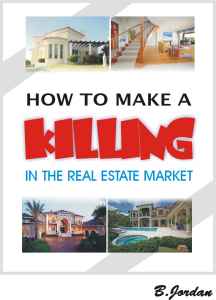
This blog gives helpful insights into the newly released book, "How to Make a Killing in the Real Estate Market." Check out the website at www.howtomakeakillinginrealestate.com
Showing posts with label How to buy foreclosures. Show all posts
Showing posts with label How to buy foreclosures. Show all posts
Monday, August 23, 2010


An Overview on Buying Home and Land in Houston Texas
By Beatrice Jordan
Houston, Texas is attracting an ever-increasing number of new residents, resulting in a boom in the buying home and land industry in this part of the country. This growing industry is attracting new builder’s as well, so competition for customers if fierce.
When buying properties the first thing to do is research. Especially if you are buying a property on a place that you are not familiar with.
If you are interested in buying home and land in Houston Texas then you do some research first on how there real state venture is done. Ask some friends from that place and gather as much information about the kind of houses that is built, the cost of construction and real state in that place.
In this way you will be able to project a tentative financial figure on how much you are about to pay and if the expenses are going to fit into your budget.
Before buying home and land in Houston Texas, you should have to consider first on how to get the best possible home for your money – one that is not just the best for your self but for your family as well, your community and your planet.
I may sound a little bit ecological in here but people in Texas are just like that. Here in Texas everyone just have the legacy of protecting their natural resources. So make keep in mind that green in Texas does not only mean money but the land as well.
You should also consider the housing price in a certain area before making a decision in buying home and land in there. In Houston, Texas the median home price ranges from $126,500.00 to 129,200.00 with a yearly increase of 2.10% based on the study conducted from the first quarter of 2002 up to the first quarter of 2003.
But probably it will be much higher this year due to the pour down of evacuees that were victims of flash floods brought by hurricane Katrina. Some of these evacuees may build there permanent homes in here, making it more competitive to buy home and land in Houston, Texas.
Buying land and home in Houston Texas is just the same as buying land in other states when it comes to the basics of real state.
Just follow the basics of buying home and land and you will surely land down on a good deal. Always make sure that before purchasing such properties you have already seen and inspected the state. Check if everything is in order.
Especially on the legal papers make sure that the right documents are given to you. Legal issues are a big burden when worse cases arise and it can cost you a big lump of money too, so check first before buying.
Consult with property attorneys and lawyers for this kind of matter, usually different states have different laws regarding ownership of land and properties. This thing may cost you a bit, but can save you a great deal of burden in the future.
Also check out the neighborhood before buying, is this kind of environmental lifestyle good for you and your family? Is it a safe place for your children to grow up?
When it comes to finances also make sure that everything is on the budget. But if ever things do not fit there are other options that you can use like housing loans which is a very popular thing these days.
Applying for a loan is easy as long as you have a good credit records. Those with bankruptcy record may have a hard time applying for one.
I am not saying that people with bad credit record cannot have housing loans they can but may take a little bit longer process than those people that have a good one. You can check out the internet for some loan listing in Houston if you are not from there.
Just remember that when buying home and land in Houston Texas you should have to be careful on so many promising promotions, it is much better to get somebody who is good and trained in this profession than to do it by yourself. Get somebody locally and who is familiar with the things around Texas.
House buying is great as long as you don’t stress out too much, stressed minds cant think well so take some time to relax when your there, Texas is great get-away place so roam around and get to know it better, this maybe your home soon anyway.
Houston, Texas is attracting an ever-increasing number of new residents, resulting in a boom in the buying home and land industry in this part of the country. This growing industry is attracting new builder’s as well, so competition for customers if fierce.
When buying properties the first thing to do is research. Especially if you are buying a property on a place that you are not familiar with.
If you are interested in buying home and land in Houston Texas then you do some research first on how there real state venture is done. Ask some friends from that place and gather as much information about the kind of houses that is built, the cost of construction and real state in that place.
In this way you will be able to project a tentative financial figure on how much you are about to pay and if the expenses are going to fit into your budget.
Before buying home and land in Houston Texas, you should have to consider first on how to get the best possible home for your money – one that is not just the best for your self but for your family as well, your community and your planet.
I may sound a little bit ecological in here but people in Texas are just like that. Here in Texas everyone just have the legacy of protecting their natural resources. So make keep in mind that green in Texas does not only mean money but the land as well.
You should also consider the housing price in a certain area before making a decision in buying home and land in there. In Houston, Texas the median home price ranges from $126,500.00 to 129,200.00 with a yearly increase of 2.10% based on the study conducted from the first quarter of 2002 up to the first quarter of 2003.
But probably it will be much higher this year due to the pour down of evacuees that were victims of flash floods brought by hurricane Katrina. Some of these evacuees may build there permanent homes in here, making it more competitive to buy home and land in Houston, Texas.
Buying land and home in Houston Texas is just the same as buying land in other states when it comes to the basics of real state.
Just follow the basics of buying home and land and you will surely land down on a good deal. Always make sure that before purchasing such properties you have already seen and inspected the state. Check if everything is in order.
Especially on the legal papers make sure that the right documents are given to you. Legal issues are a big burden when worse cases arise and it can cost you a big lump of money too, so check first before buying.
Consult with property attorneys and lawyers for this kind of matter, usually different states have different laws regarding ownership of land and properties. This thing may cost you a bit, but can save you a great deal of burden in the future.
Also check out the neighborhood before buying, is this kind of environmental lifestyle good for you and your family? Is it a safe place for your children to grow up?
When it comes to finances also make sure that everything is on the budget. But if ever things do not fit there are other options that you can use like housing loans which is a very popular thing these days.
Applying for a loan is easy as long as you have a good credit records. Those with bankruptcy record may have a hard time applying for one.
I am not saying that people with bad credit record cannot have housing loans they can but may take a little bit longer process than those people that have a good one. You can check out the internet for some loan listing in Houston if you are not from there.
Just remember that when buying home and land in Houston Texas you should have to be careful on so many promising promotions, it is much better to get somebody who is good and trained in this profession than to do it by yourself. Get somebody locally and who is familiar with the things around Texas.
House buying is great as long as you don’t stress out too much, stressed minds cant think well so take some time to relax when your there, Texas is great get-away place so roam around and get to know it better, this maybe your home soon anyway.
Wednesday, August 18, 2010
Buying Real Estate Foreclosures
By Beatrice Jordan
When looking for a home for you and your family you will come across all kinds of deals, bargains, and so-called values along the way. If price is a very tangible object for you and your real estate investment then you might seriously want to consider the value of foreclosures. If you are hoping to invest in real estate in order to turn a profit then you may also wish to consider these properties that are often sold well below the ordinary value of the property because they are in varying degrees of disrepair.
Foreclosures are properties that have been taken back by the lenders because the previous owners were unable to continue making payments on the property. Being that these homes were often owned by those in financial distress and may have been empty for some time before being sold, chances are that the foreclosure homes being sold at any given time are in some degree of disrepair. The shabbiness of many of these properties is one of the factors that keeps the prices down. Another is the fact that the lenders are essentially attempting to recoup their investment in the property. For this reason they are often willing to take less than the value of the property if that is what is owed on the property.
Why are these properties often in a state of disrepair? Truthfully, there are many reasons but the primary culprit in this situation is money. Obviously the owners of the home were struggling to make the payments or the home would not be in the state of foreclosure. If the notes on the property were difficult to begin with it makes perfect sense that other issues such as leaking roofs, shabby carpeting, or plumbing maintenance would take a distant second in priority to making the house payment.
At the same time, there are those who are bitter about loosing their homes. As sad as the situation may be some add insult to injury by damaging these properties intentionally. These homeowners feel they have nothing left to loose and if they cannot have their property hole then the lenders should not as well. While this is by no means the way to go there are very many who choose this path over other options.
The fact is that their loss in these situations is actually your gain. The damage they do to the property is often not terribly expensive to repair though it can be quite bothersome. Your willingness to do the work in order to create a beautiful home for you and your family or as an investment can often translate to big savings at the closing table or when negotiating the price of the property. Foreclosures can allow families to buy larger homes in better neighborhoods than they would ordinarily be able to afford. They can also provide a fabulous kick-start to a property investment portfolio.
Despite common claims and Internet advertisements, you do not need to buy a list in order to find foreclosed real estate in your area. You simply need to procure the services of a competent realtor and let him or her know that your intentions are to purchase a foreclosed property or some other property that is selling well below market value. You might be amazed at the wealth of information and assistance your realtor can provide not only in finding excellent foreclosures but also when it comes to procuring financing for some of the more creatively damaged foreclosures you may run across at insane bargain prices.
When looking for a home for you and your family you will come across all kinds of deals, bargains, and so-called values along the way. If price is a very tangible object for you and your real estate investment then you might seriously want to consider the value of foreclosures. If you are hoping to invest in real estate in order to turn a profit then you may also wish to consider these properties that are often sold well below the ordinary value of the property because they are in varying degrees of disrepair.
Foreclosures are properties that have been taken back by the lenders because the previous owners were unable to continue making payments on the property. Being that these homes were often owned by those in financial distress and may have been empty for some time before being sold, chances are that the foreclosure homes being sold at any given time are in some degree of disrepair. The shabbiness of many of these properties is one of the factors that keeps the prices down. Another is the fact that the lenders are essentially attempting to recoup their investment in the property. For this reason they are often willing to take less than the value of the property if that is what is owed on the property.
Why are these properties often in a state of disrepair? Truthfully, there are many reasons but the primary culprit in this situation is money. Obviously the owners of the home were struggling to make the payments or the home would not be in the state of foreclosure. If the notes on the property were difficult to begin with it makes perfect sense that other issues such as leaking roofs, shabby carpeting, or plumbing maintenance would take a distant second in priority to making the house payment.
At the same time, there are those who are bitter about loosing their homes. As sad as the situation may be some add insult to injury by damaging these properties intentionally. These homeowners feel they have nothing left to loose and if they cannot have their property hole then the lenders should not as well. While this is by no means the way to go there are very many who choose this path over other options.
The fact is that their loss in these situations is actually your gain. The damage they do to the property is often not terribly expensive to repair though it can be quite bothersome. Your willingness to do the work in order to create a beautiful home for you and your family or as an investment can often translate to big savings at the closing table or when negotiating the price of the property. Foreclosures can allow families to buy larger homes in better neighborhoods than they would ordinarily be able to afford. They can also provide a fabulous kick-start to a property investment portfolio.
Despite common claims and Internet advertisements, you do not need to buy a list in order to find foreclosed real estate in your area. You simply need to procure the services of a competent realtor and let him or her know that your intentions are to purchase a foreclosed property or some other property that is selling well below market value. You might be amazed at the wealth of information and assistance your realtor can provide not only in finding excellent foreclosures but also when it comes to procuring financing for some of the more creatively damaged foreclosures you may run across at insane bargain prices.
Sunday, August 15, 2010

The foreclosure process is not very difficult to understand. There are several stages during which the homeowner has an opportunity to bring the loan current and avoid foreclosure.
After about three to six months of missed payments, the lender orders a trustee to record a Notice of Default at the County Recorder's Office. This puts the borrower on notice that he is facing foreclosure and starts a reinstatement period that typically runs until five days before the home is auctioned off.
If the default isn't corrected (the loan must be brought current) within three months, a foreclosure sale date is established. The homeowner will receive a Notice of Sale, and this notice will also be posted on the property. In addition, the Notice of Sale is recorded at the County Recorder's Office in the county where the property is located. Finally, this Notice of Sale is also published in newspapers local to the county in question over a three-week period.
The foreclosure Trustee Sale typically occurs on the steps of the county courthouse in which the property is located. The time and location of this sale are designated in the Notice of Sale. At the Trustee Sale, the property is auctioned in public to the highest bidder, who must pay the high bid price in cash, typically with a deposit up front and the remainder within 24 hours. The winner of the auction will then receive the trustee’s deed to the property.
Foreclosure Auction
At auction, an opening bid on the property is set by the foreclosing lender. This opening bid is usually equal to the outstanding loan balance, interest accrued, and any additional fees and attorney fees associated with the Trustee Sale. If there are no bids higher than the opening bid, the property will be purchased by the attorney conducting the sale, for the lender.
If this occurs, and the opening bid is not met, the property is deemed a REO or Real Estate Owned. This typically occurs because many of the properties up for sale at foreclosure auctions are worth less than the total amount owed to the bank or lender.
When you purchase property at a foreclosure sale, all junior liens other than property taxes are wiped out. Priority of liens is determined by the date of recording. When you purchase a Bank REO, you will typically receive the property with a clean title.
For more insightful information into the foreclosure process read our new ebook at
www.howtomakeakillinginrealestate.com
Friday, August 13, 2010
Preview of Chapter 1: Overview of How to Make a Killing in Real Estate
Chapter 1: Introduction
Real estate is one of the greatest wealth building tools in the world. Unfortunately, many people think that building wealth is tied to how much money they can borrow and how large a mortgage they can attain. Well after the real estate and bank crash the reality should now be settling in that all that glitters is not gold. True wealth is not built by accumulating houses through debt or by the number of platinum credit cards in your wallet.
A prime example of this is Donald Trump, a multi-millionaire who has filed numerous corporate Chapter 11 bankruptcies with his real estate empire. Even though he still has his own television show and is well respected in the business arena he is proof that buying things on credit is not always beneficial in the long run.
True wealth means having no debt and at least twenty-four months living expenses stashed away in cash savings. This means your cars are paid for, your house is paid for, and you have no credit card balance that rolls over month after month. True wealth is not tied to your FICA score. It means that if you lose your job, you don’t have to worry because your house is paid for and you have other investment income that is bringing in money. Your wealth is not tied to your job or your car, or your spouse as all of those things can change.
This e-book will teach you everything that you need to know about buying a real estate property and making a profit in the first year, doubling your investment in the second year, and eventually selling it when the market rebounds.
This book is meant to be an educational tool to get out of the poverty trap and into true wealth. In this book you will learn from my mistakes as a real estate investor and benefit from the things that I learned as an average woman with very little disposable income.
When you have real wealth you can choose when you want to work and if you want to work. You can decide to stay home and see the kids through their growing years or sit back and take the winter off and travel to the Caribbean, Dubai, or Europe. The world is your oyster when you have nothing to tie you down.
The real estate market represents a prime wealth building situation that everyone should take advantage of but you must do your homework and you must know when to hold them, when to walk away and when to run! I have learned all of these things and I want to share them with you. This information is not something that you will hear on the radio as most people want you to be in debt and stay in debt. Most people will teach you how to have good credit and keep good credit and how to qualify for the house you really can’t afford.
Not many people will recommend buying a house for cash or if they do it may seem insurmountable especially when you are barely making ends meet, but it can be done.
There are pockets of areas throughout the United States where you are able to purchase real estate for under $40,000 in decent neighborhoods. One area that we have researched extensively is the metro Atlanta area. This area is unique in that it has sales in some areas of Atlanta as low as $7000 and as high as $10,000,000 making it difficult to establish an average.
We have also researched the Orlando Florida area with its rich resources and favored city status it is a prime choice for investors. In Orlando you can find property that was purchased for $160,000 in 2008 now listed at $22,900 in 2010.
In Chapter nine, there is a case study on the Orlando Florida real estate goldmine with step-by-step instructions on finding property goldmines.
Real estate investment has produced more millionaires than any other industry and it has proven to be a genuine wealth builder for centuries as well as a wealth destroyer. How many a fine investor has bought a house with a mortgage and then lost his job and was unable to pay? He was just two weeks notice away from bankruptcy and poverty. Well that does not have to be you. Real estate investment is a long term investment and while it is possible to buy a house for $20,000 and renovate and sell it for $100,000 this usually takes time. This type of return does not happen every day, but if you select the right type of property in the right area this can happen. I have seen it happen more times than I care to mention and in this market it can happen in less than two years.
Rental income can also be very lucrative if you know how to get solid tenants and keep good tenants. I learned the hard way how to tell when a tenant is lying and will give you the secrets to the trade and make sure you don’t get duped. Real estate investing can be the path to financial freedom but it is not easy it takes perseverance, education, and hard work. This book is an eye opener so sit down, relax, and take notes.
Real estate is one of the greatest wealth building tools in the world. Unfortunately, many people think that building wealth is tied to how much money they can borrow and how large a mortgage they can attain. Well after the real estate and bank crash the reality should now be settling in that all that glitters is not gold. True wealth is not built by accumulating houses through debt or by the number of platinum credit cards in your wallet.
A prime example of this is Donald Trump, a multi-millionaire who has filed numerous corporate Chapter 11 bankruptcies with his real estate empire. Even though he still has his own television show and is well respected in the business arena he is proof that buying things on credit is not always beneficial in the long run.
True wealth means having no debt and at least twenty-four months living expenses stashed away in cash savings. This means your cars are paid for, your house is paid for, and you have no credit card balance that rolls over month after month. True wealth is not tied to your FICA score. It means that if you lose your job, you don’t have to worry because your house is paid for and you have other investment income that is bringing in money. Your wealth is not tied to your job or your car, or your spouse as all of those things can change.
This e-book will teach you everything that you need to know about buying a real estate property and making a profit in the first year, doubling your investment in the second year, and eventually selling it when the market rebounds.
This book is meant to be an educational tool to get out of the poverty trap and into true wealth. In this book you will learn from my mistakes as a real estate investor and benefit from the things that I learned as an average woman with very little disposable income.
When you have real wealth you can choose when you want to work and if you want to work. You can decide to stay home and see the kids through their growing years or sit back and take the winter off and travel to the Caribbean, Dubai, or Europe. The world is your oyster when you have nothing to tie you down.
The real estate market represents a prime wealth building situation that everyone should take advantage of but you must do your homework and you must know when to hold them, when to walk away and when to run! I have learned all of these things and I want to share them with you. This information is not something that you will hear on the radio as most people want you to be in debt and stay in debt. Most people will teach you how to have good credit and keep good credit and how to qualify for the house you really can’t afford.
Not many people will recommend buying a house for cash or if they do it may seem insurmountable especially when you are barely making ends meet, but it can be done.
There are pockets of areas throughout the United States where you are able to purchase real estate for under $40,000 in decent neighborhoods. One area that we have researched extensively is the metro Atlanta area. This area is unique in that it has sales in some areas of Atlanta as low as $7000 and as high as $10,000,000 making it difficult to establish an average.
We have also researched the Orlando Florida area with its rich resources and favored city status it is a prime choice for investors. In Orlando you can find property that was purchased for $160,000 in 2008 now listed at $22,900 in 2010.
In Chapter nine, there is a case study on the Orlando Florida real estate goldmine with step-by-step instructions on finding property goldmines.
Real estate investment has produced more millionaires than any other industry and it has proven to be a genuine wealth builder for centuries as well as a wealth destroyer. How many a fine investor has bought a house with a mortgage and then lost his job and was unable to pay? He was just two weeks notice away from bankruptcy and poverty. Well that does not have to be you. Real estate investment is a long term investment and while it is possible to buy a house for $20,000 and renovate and sell it for $100,000 this usually takes time. This type of return does not happen every day, but if you select the right type of property in the right area this can happen. I have seen it happen more times than I care to mention and in this market it can happen in less than two years.
Rental income can also be very lucrative if you know how to get solid tenants and keep good tenants. I learned the hard way how to tell when a tenant is lying and will give you the secrets to the trade and make sure you don’t get duped. Real estate investing can be the path to financial freedom but it is not easy it takes perseverance, education, and hard work. This book is an eye opener so sit down, relax, and take notes.
Subscribe to:
Posts (Atom)